Recent work in machine learning, optimization, and distributed learning, read in depth. Each note links to the original paper and distinguishes the authors’ claims from our own calculations and research questions.
November 26, 2026 · Paper published 2026-11-25
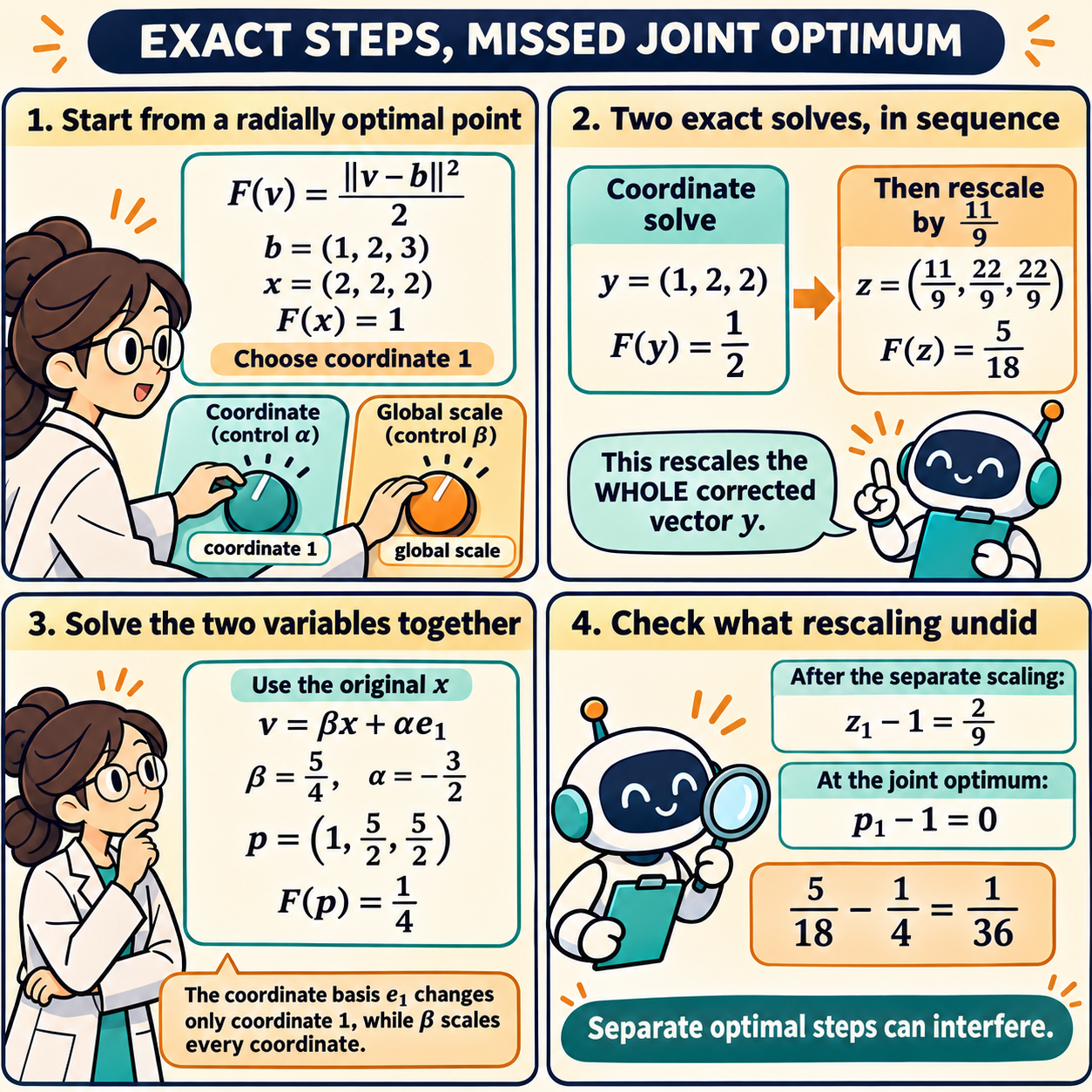
An exact three-dimensional quadratic example compares a sequential coordinate-and-scale pass with a joint plane solve. Completing the square exposes the remaining objective gap.
Read the analysis and worked example → · Original paper
November 25, 2026 · Paper published 2026-11-23
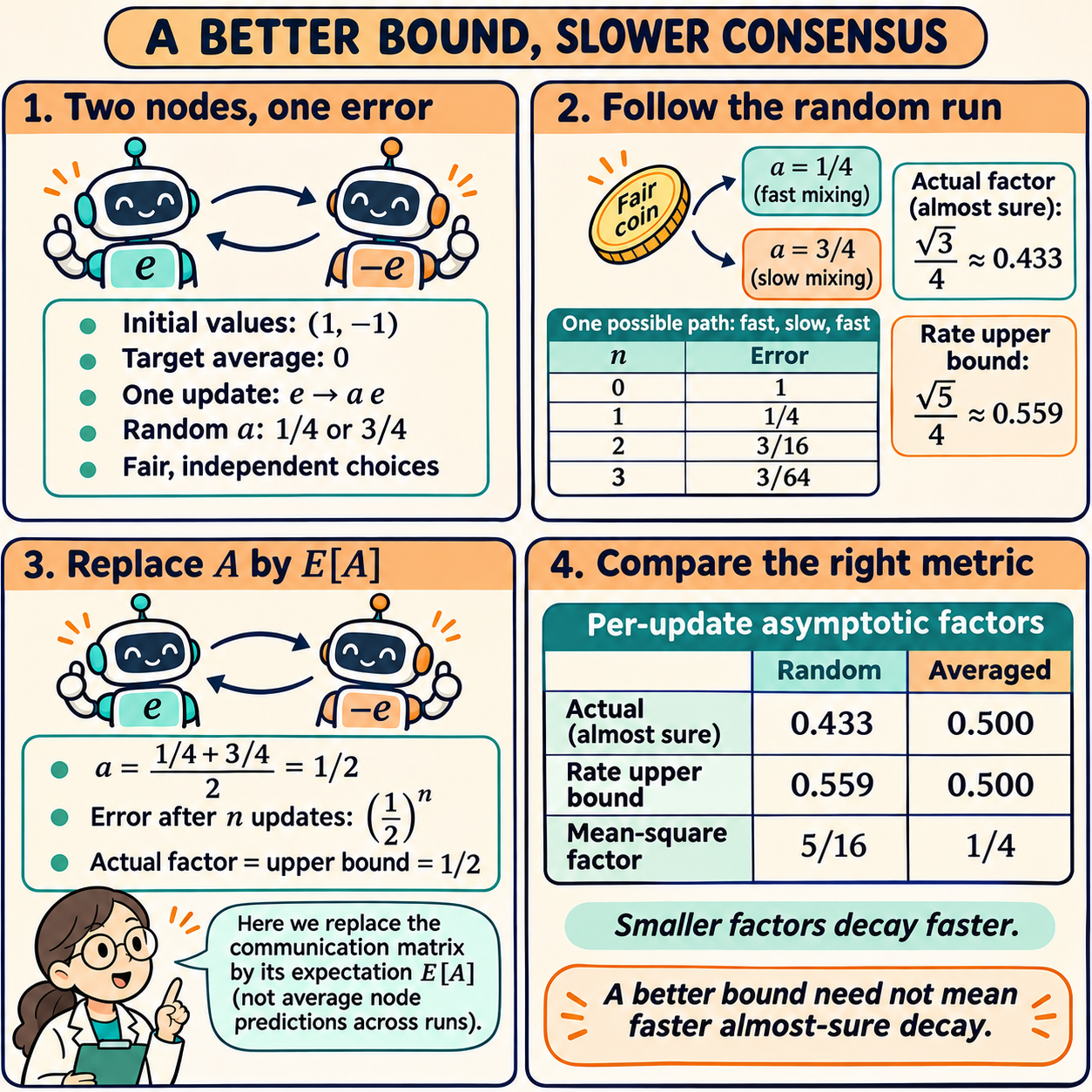
Two positive communication matrices give an exact counterexample to ranking protocols by their rate bounds alone. Geometric, arithmetic and quadratic means explain the reversal.
Read the analysis and worked example → · Original paper
November 24, 2026 · Paper published 2026-11-22
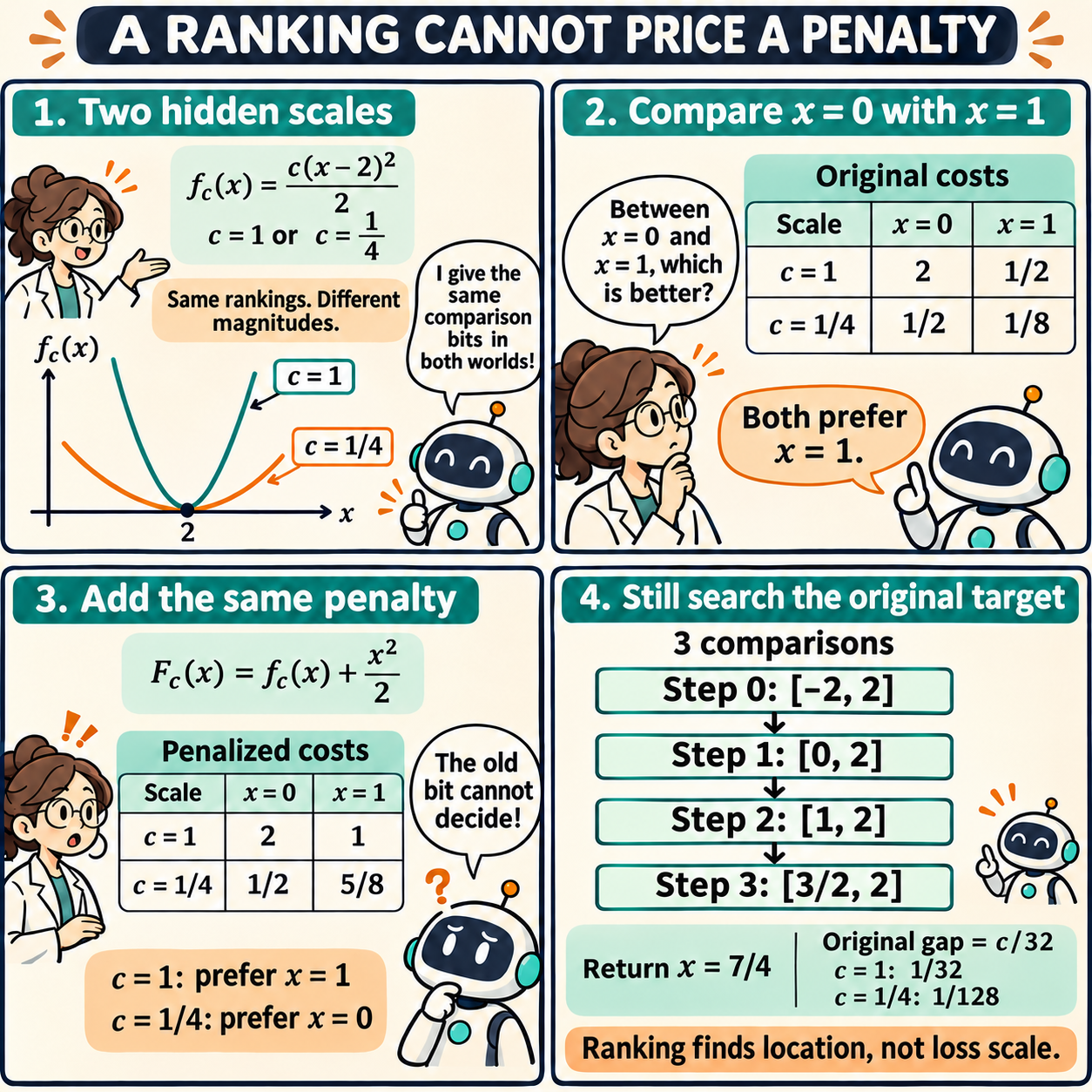
Two scaled quadratic losses give the same comparisons. Adding the same penalty reverses a pairwise choice, while three exact comparisons still locate a good point for the original objective.
Read the analysis and worked example → · Original paper
November 23, 2026 · Paper published 2026-11-19
Pre-registered answer tests control repeated checking. An exact two-answer calculation shows how choosing the stake after seeing a response destroys that guarantee.

Read the analysis and worked example → · Original paper
November 22, 2026 · Paper published 2026-11-19
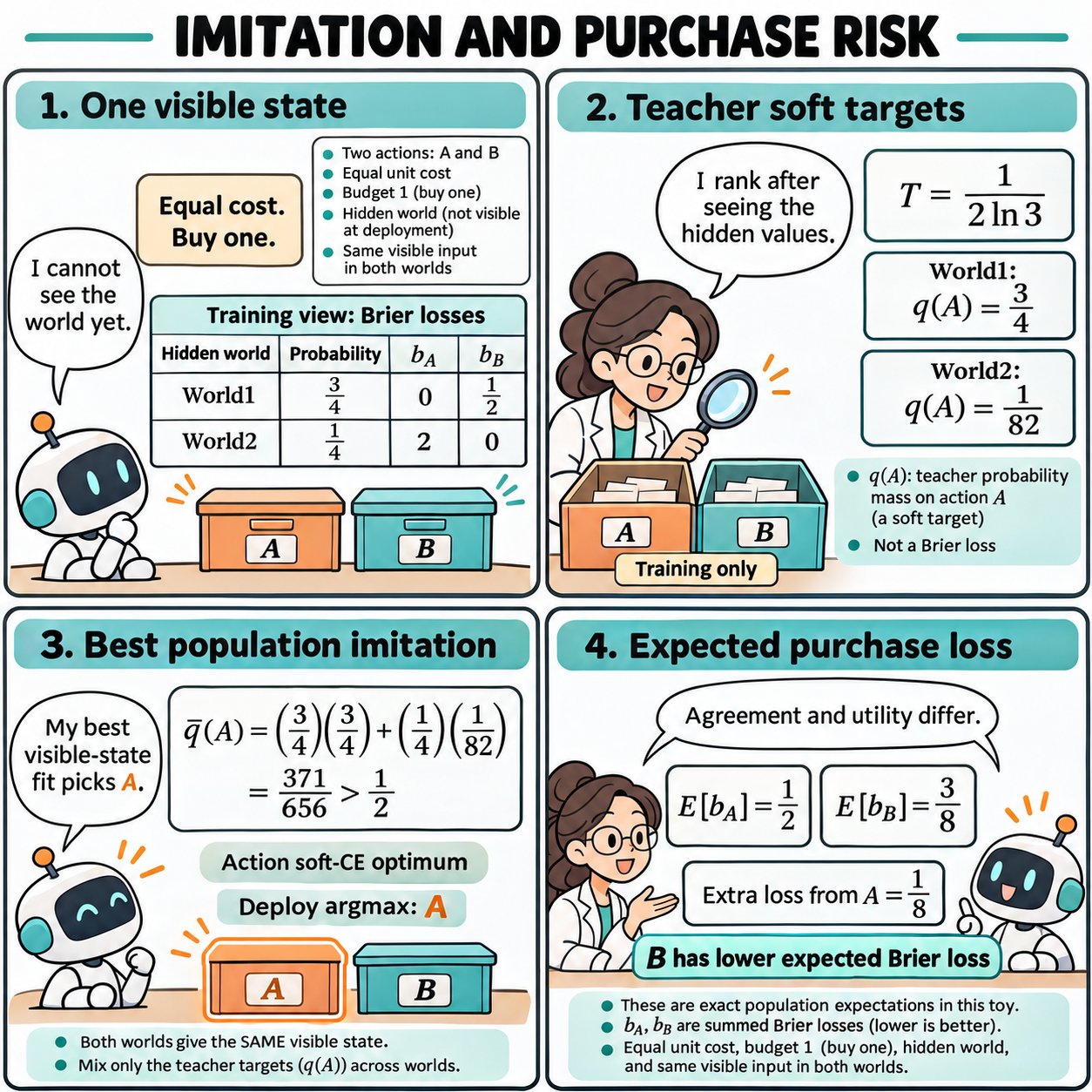
Two hidden worlds give the same visible input. An exact calculation separates the best population imitation, the best affordable feature, and the extra loss caused by their different objectives.
Read the analysis and worked example → · Original paper
November 21, 2026 · Paper published 2026-11-18
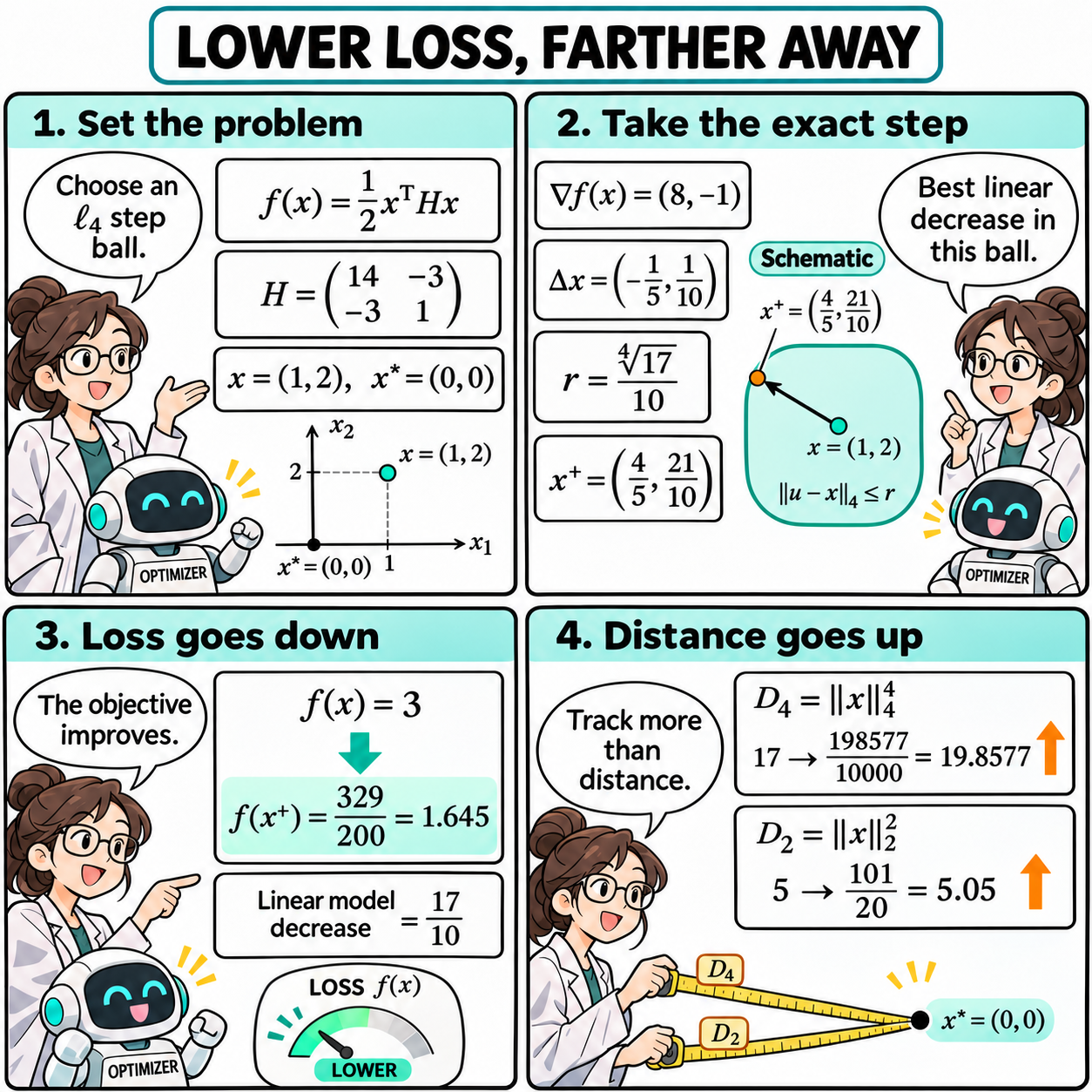
A smooth quadratic and a unique local step lower the loss while increasing two distances to the optimum. Exact arithmetic identifies the geometry and a usable descent guarantee.
Read the analysis and worked example → · Original paper
November 20, 2026 · Paper published 2026-11-18
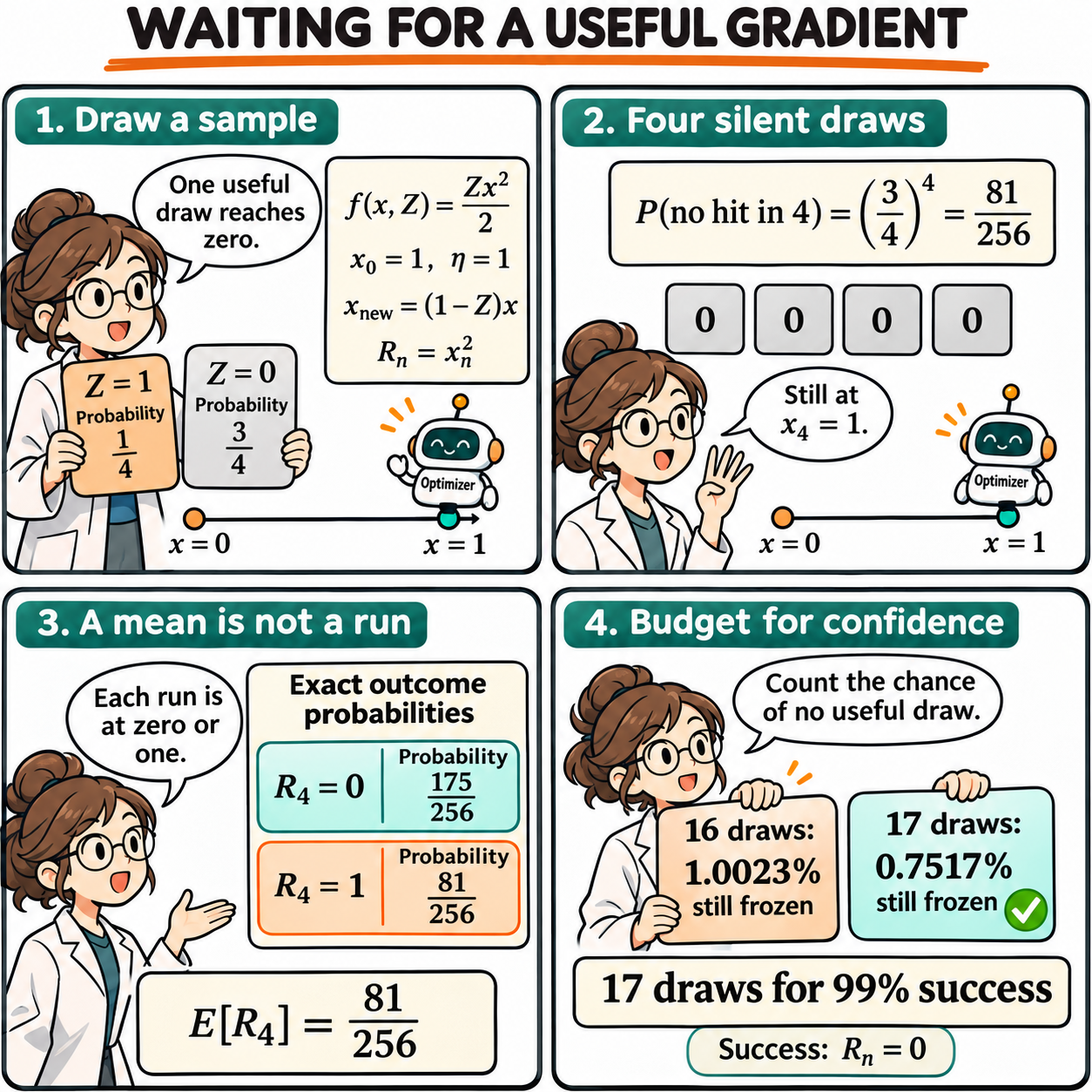
Exact outcome probabilities distinguish a successful run from a falling mean, and reveal how averaging and mini-batching change the same sample budget.
Read the analysis and worked example → · Original paper
November 19, 2026 · Paper published 2026-11-18
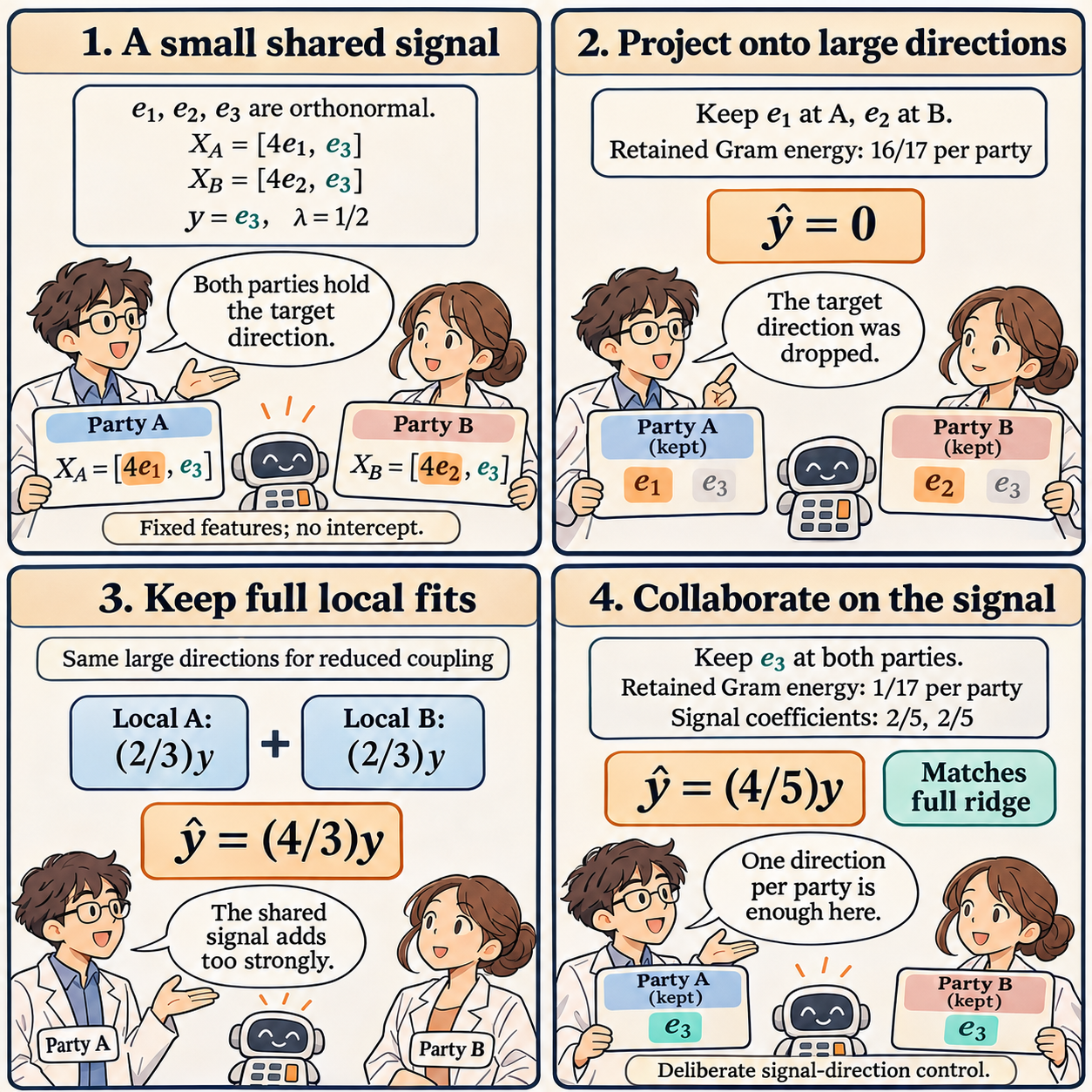
Two feature holders share a small predictive direction. An exact ridge example shows why spectral projection can discard it, why full local fits can overcount it, and how an omitted coupling controls the resulting error.
Read the analysis and worked example → · Original paper
November 18, 2026 · Paper published 2026-11-17
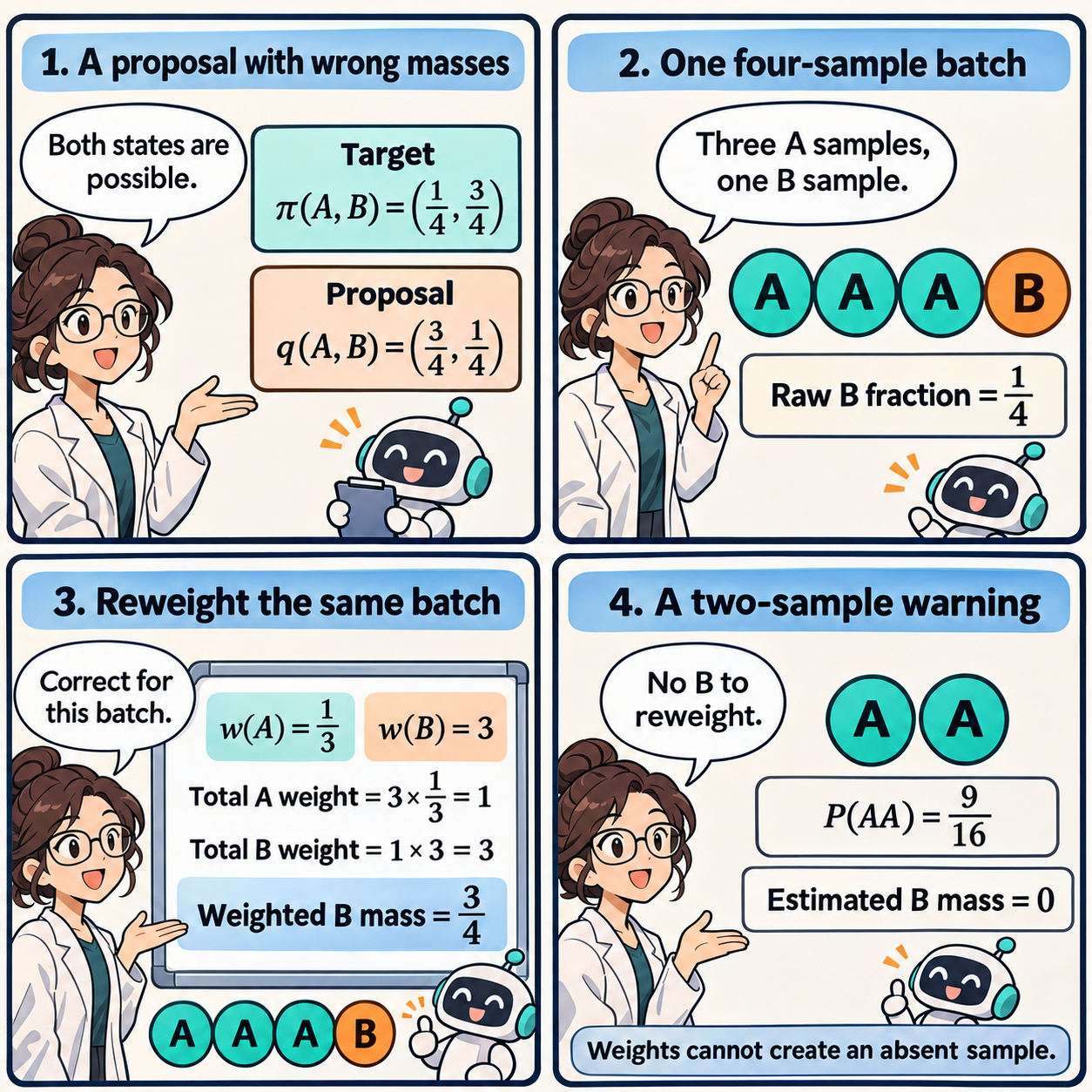
A two-state sampler separates exact importance identities from finite-batch bias and missing coverage. A Gaussian regression example then shows how the training distribution changes the learned score.
Read the analysis and worked example → · Original paper
November 17, 2026 · Paper published 2026-11-16
A three-input example separates a reusable history vector from persistent additive sums. A rank-completion proof, a small-parameter limit and a quadratic recurrence explain the distinction and its limits.
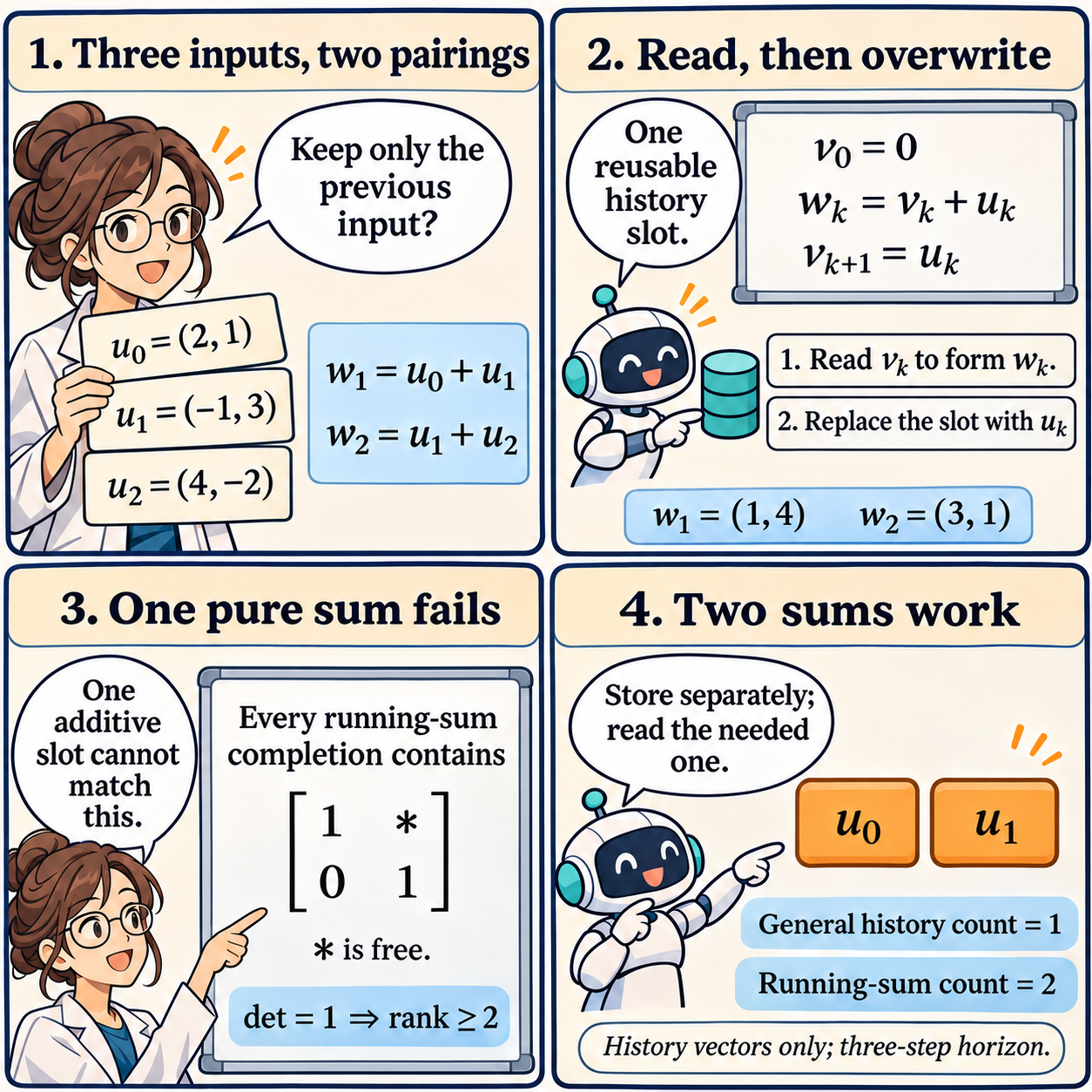
Read the analysis and worked example → · Original paper
November 16, 2026 · Paper published 2026-11-13
A binary probability example shows how an exactly stored difference can vanish in a KL calculation, why a quadratic remainder helps, and why sampled values and gradients need separate interpretation.
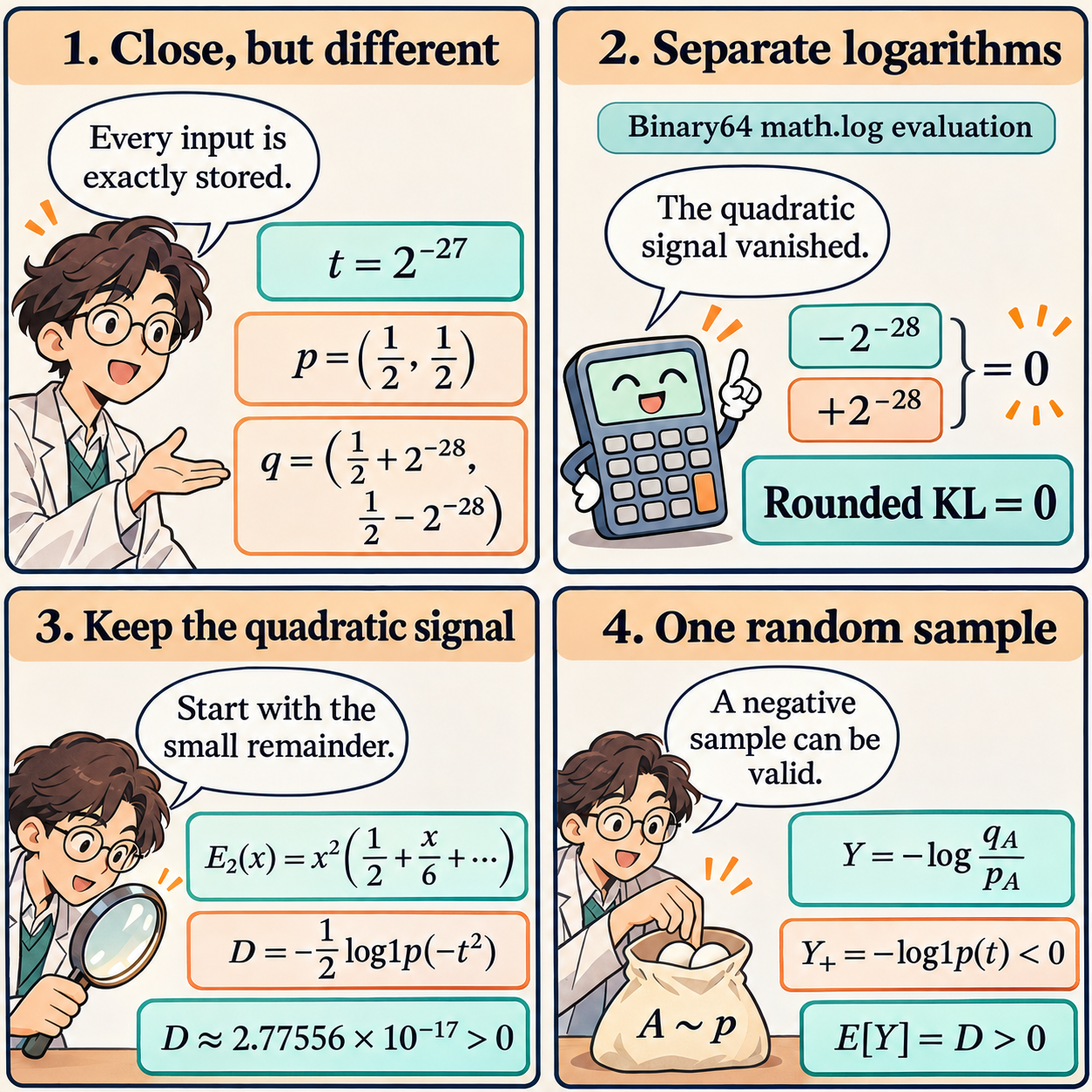
Read the analysis and worked example → · Original paper
November 15, 2026 · Paper published 2026-11-10
A two-dimensional bilinear game shows outward forward steps, lost monotonicity, and a distance-decreasing extragradient correction.
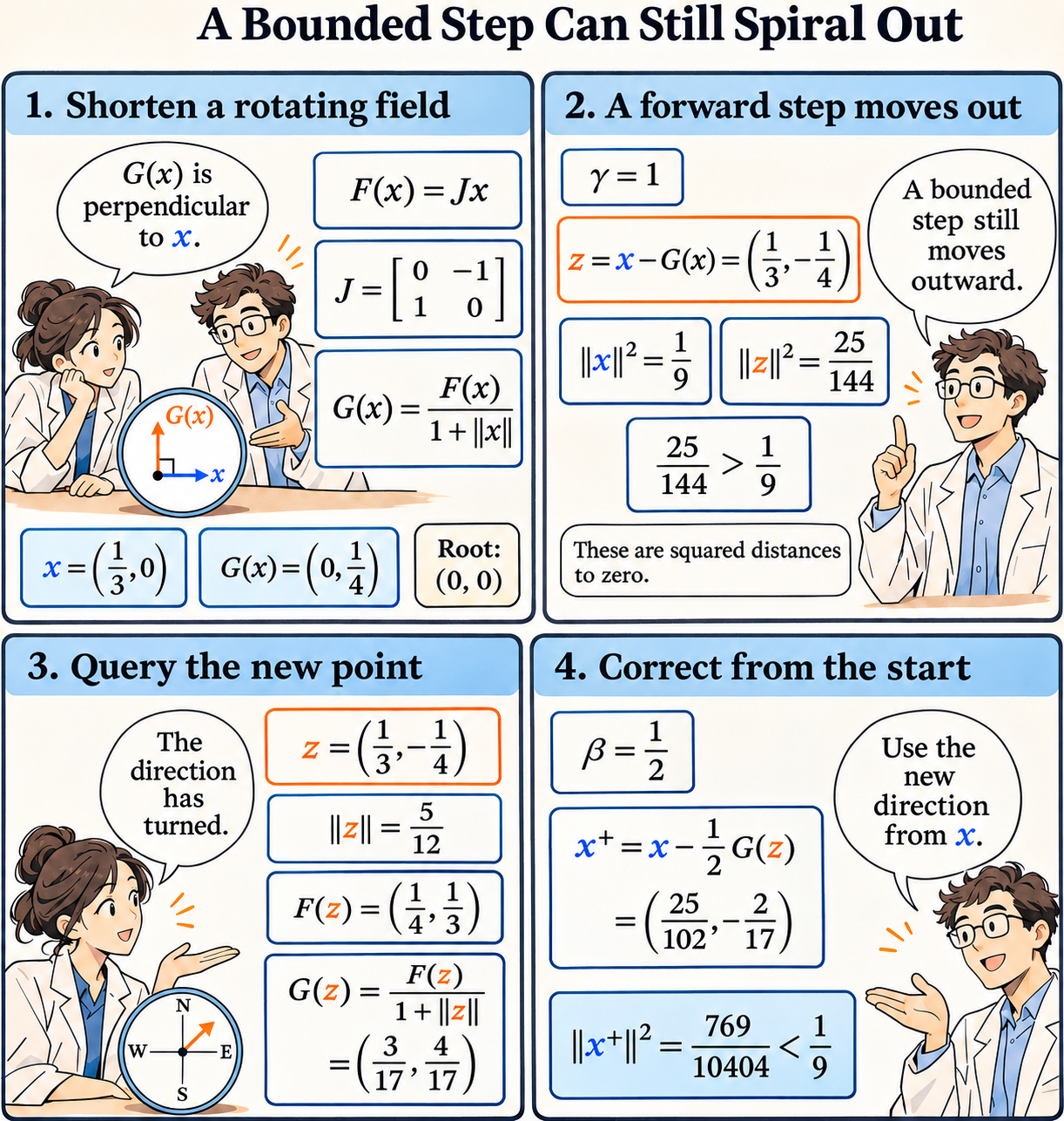
Read the analysis and worked example → · Original paper
November 14, 2026 · Paper published 2026-11-12
A second mixing step reduces model disagreement while increasing local gradient dispersion, with the same mean direction.
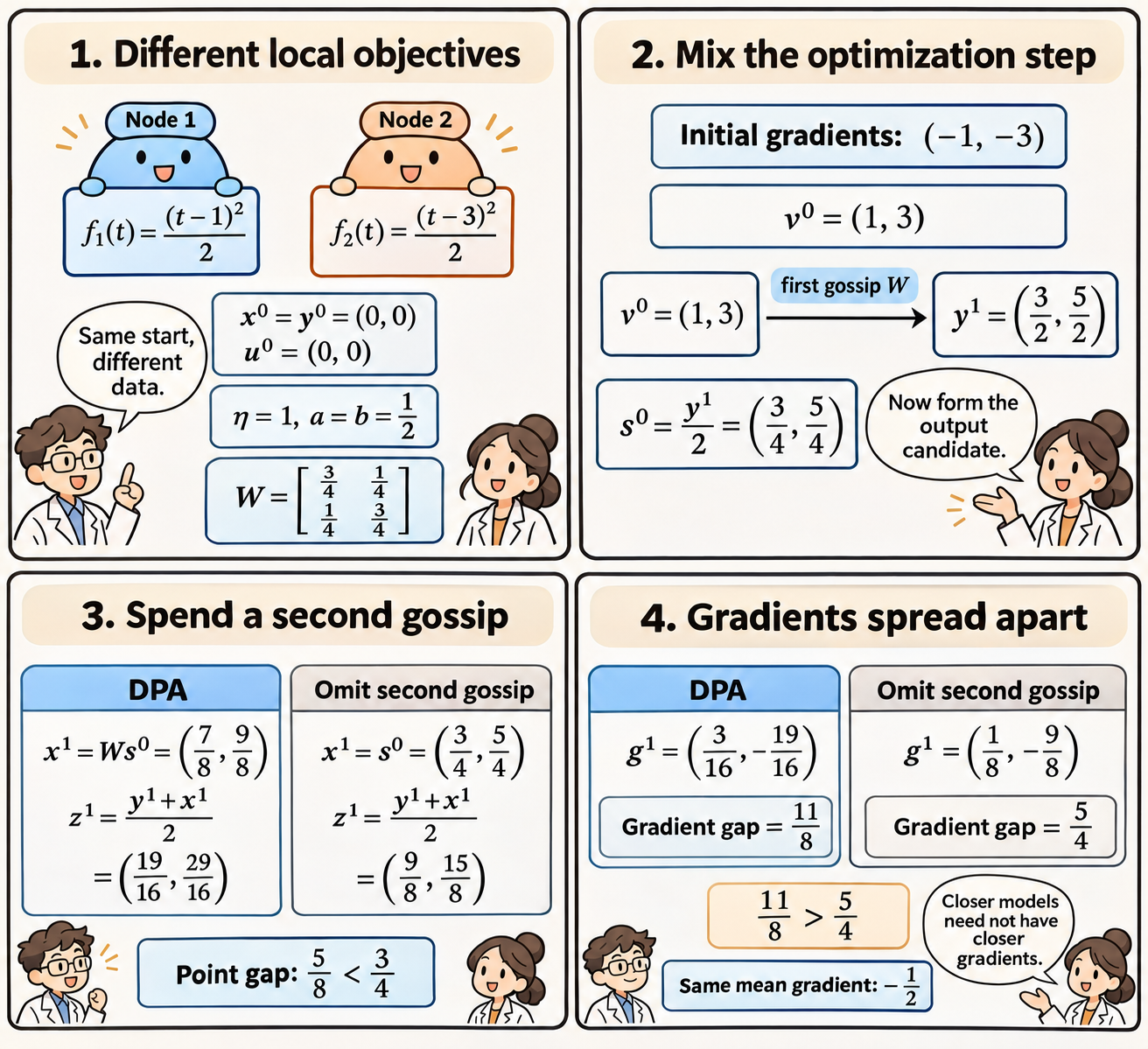
Read the analysis and worked example → · Original paper
November 13, 2026 · Paper published 2026-11-12
A Gaussian sign calculation explains a local rate gap of 4 instead of 16, why the coordinate basis matters, and why the step still needs to shrink.
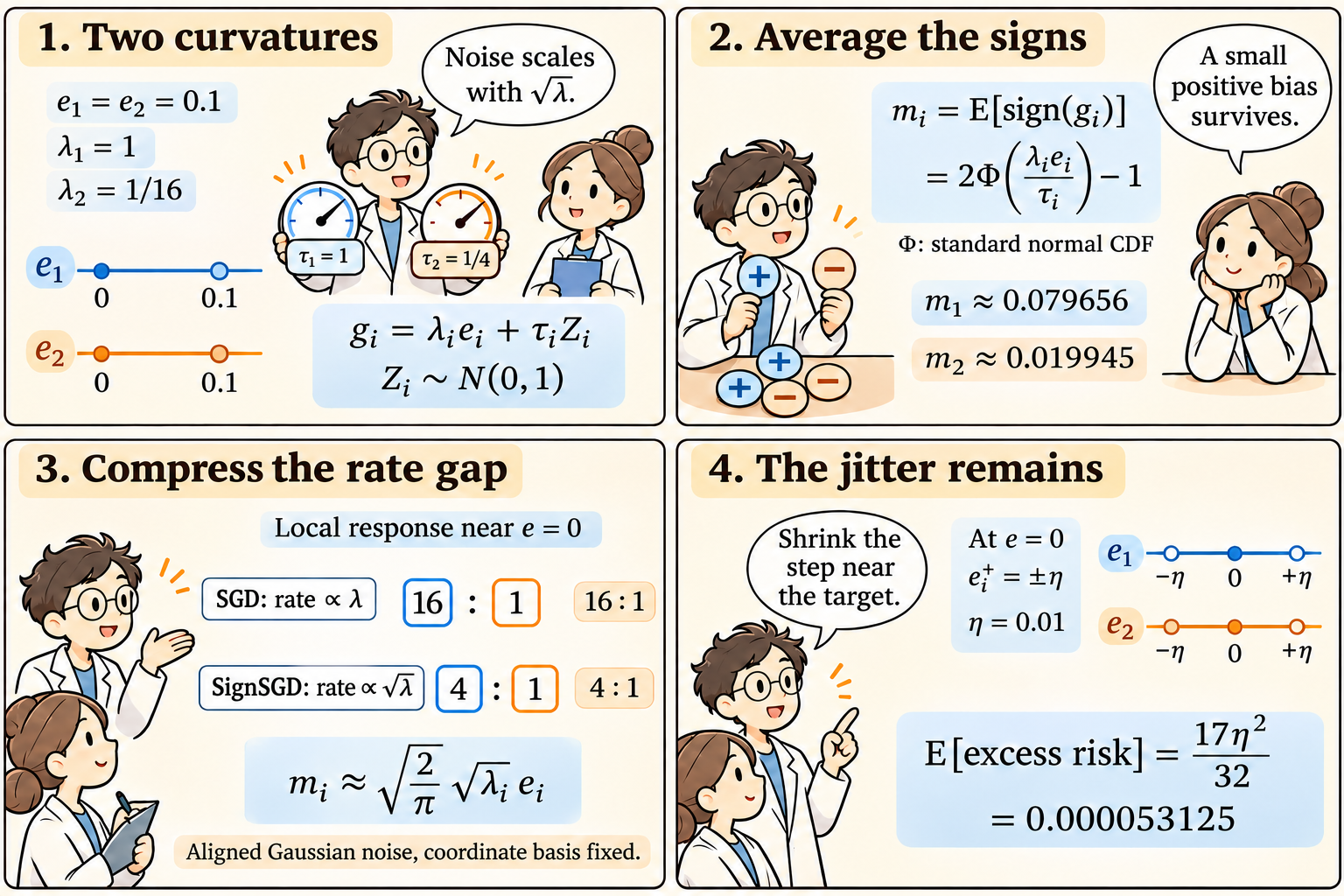
Read the analysis and worked example → · Original paper
November 12, 2026 · Paper published 2026-11-10
Three attention blocks show why a large mass can be harmless to delete, a zero-valued block can matter, and two removal errors can cancel.
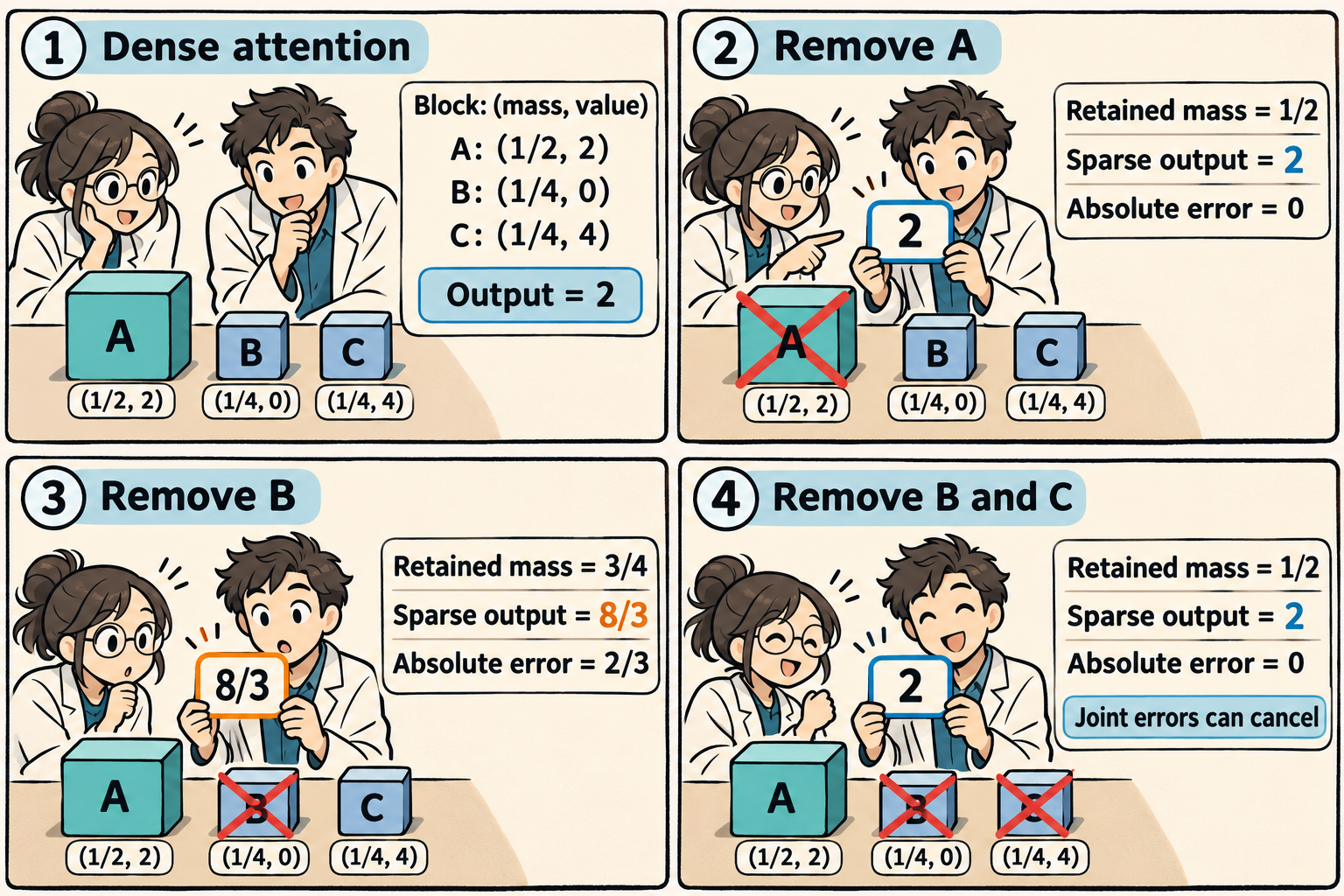
Read the analysis and worked example → · Original paper
November 11, 2026 · Paper published 2026-11-10
A two-dimensional calculation shows how a fixed positive quadratic creates curvature, moves the minimizer and introduces an accuracy tradeoff.
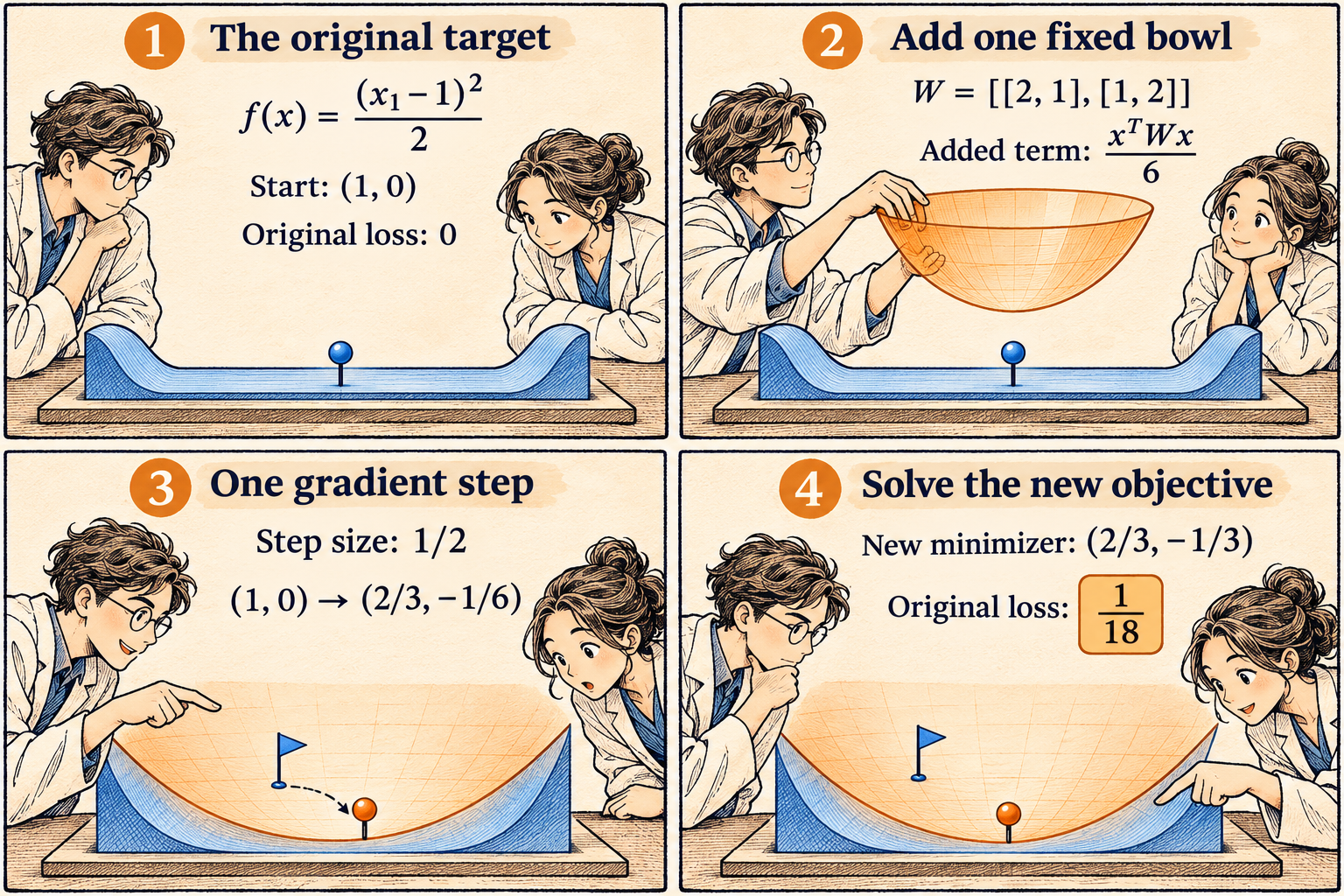
Read the analysis and worked example → · Original paper
November 10, 2026 · Paper published 2026-11-05
In a two-player game, the same unbiased compressor gives a mean-square error floor of 16/3 on strategy values and geometric decay on increments.
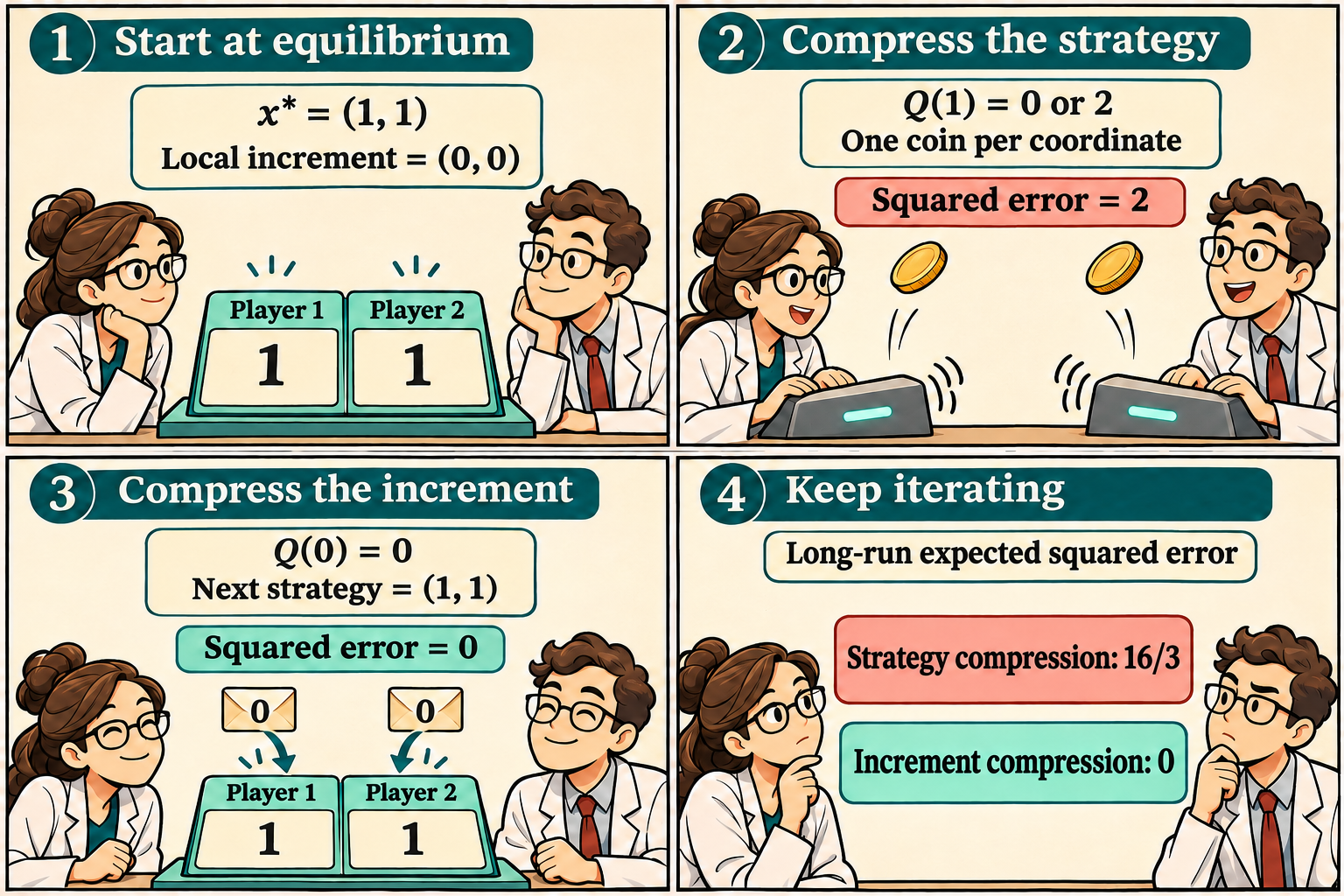
Read the analysis and worked example → · Original paper
November 9, 2026 · Paper published 2026-11-04
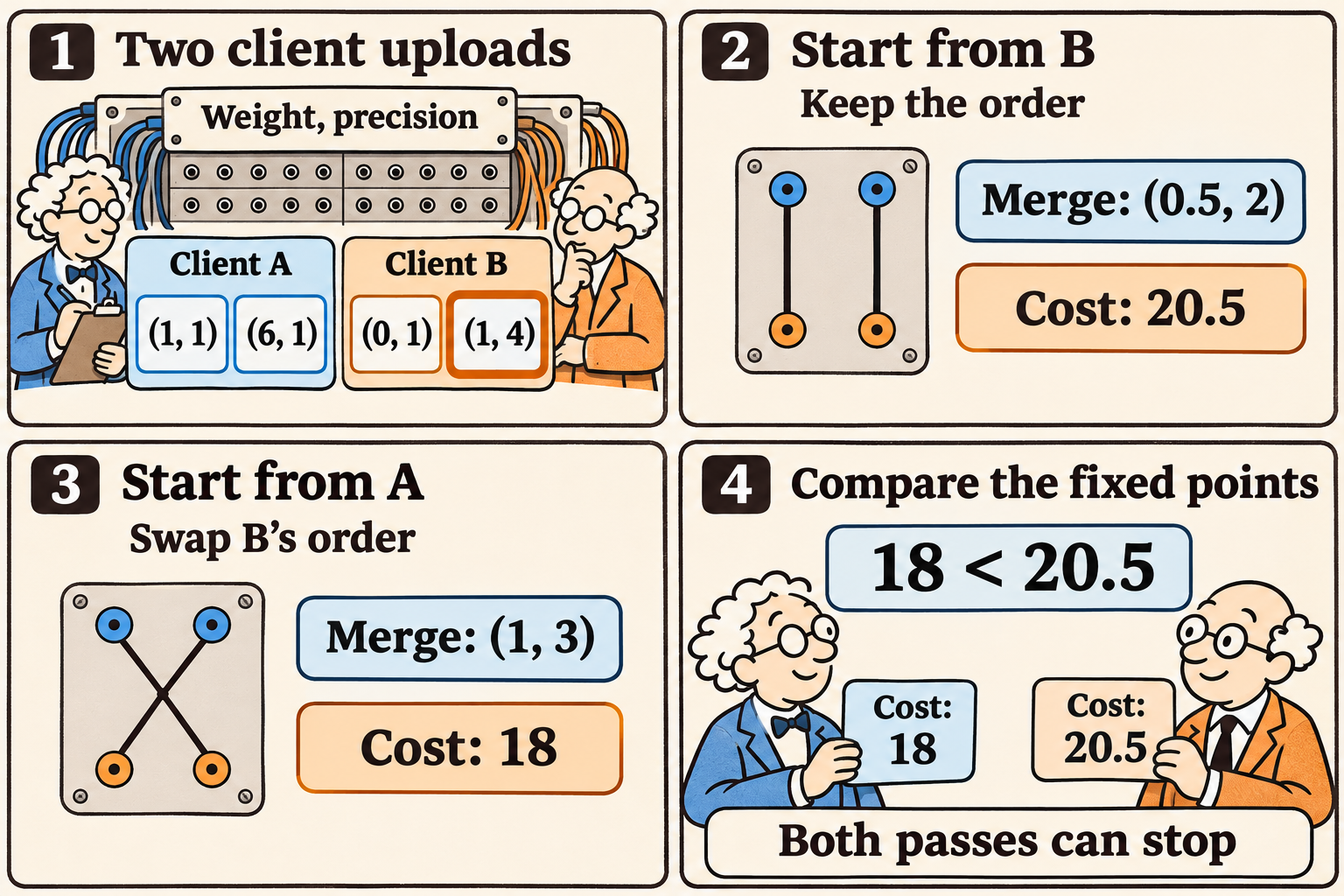
Two exact assignment-and-averaging runs on the same client uploads reach different fixed points. A two-neuron calculation shows how damping changes the preferred pairing.
Read the analysis and worked example → · Original paper
November 8, 2026 · Paper published 2026-11-05
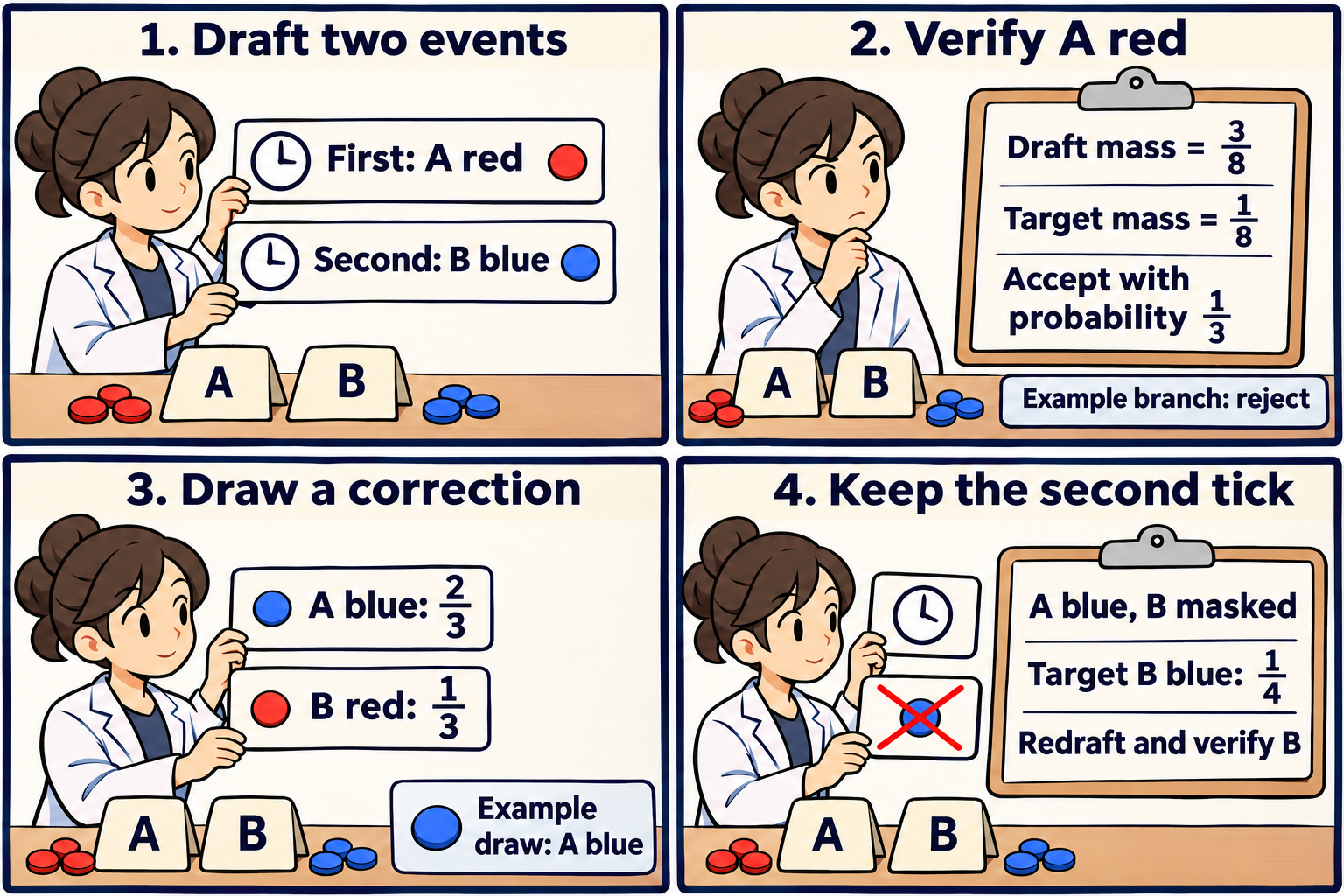
A two-position example shows how acceptance and correction recover the target distribution, and why a rejected prefix invalidates later verification rows.
Read the analysis and worked example → · Original paper
November 7, 2026 · Paper published 2026-11-05
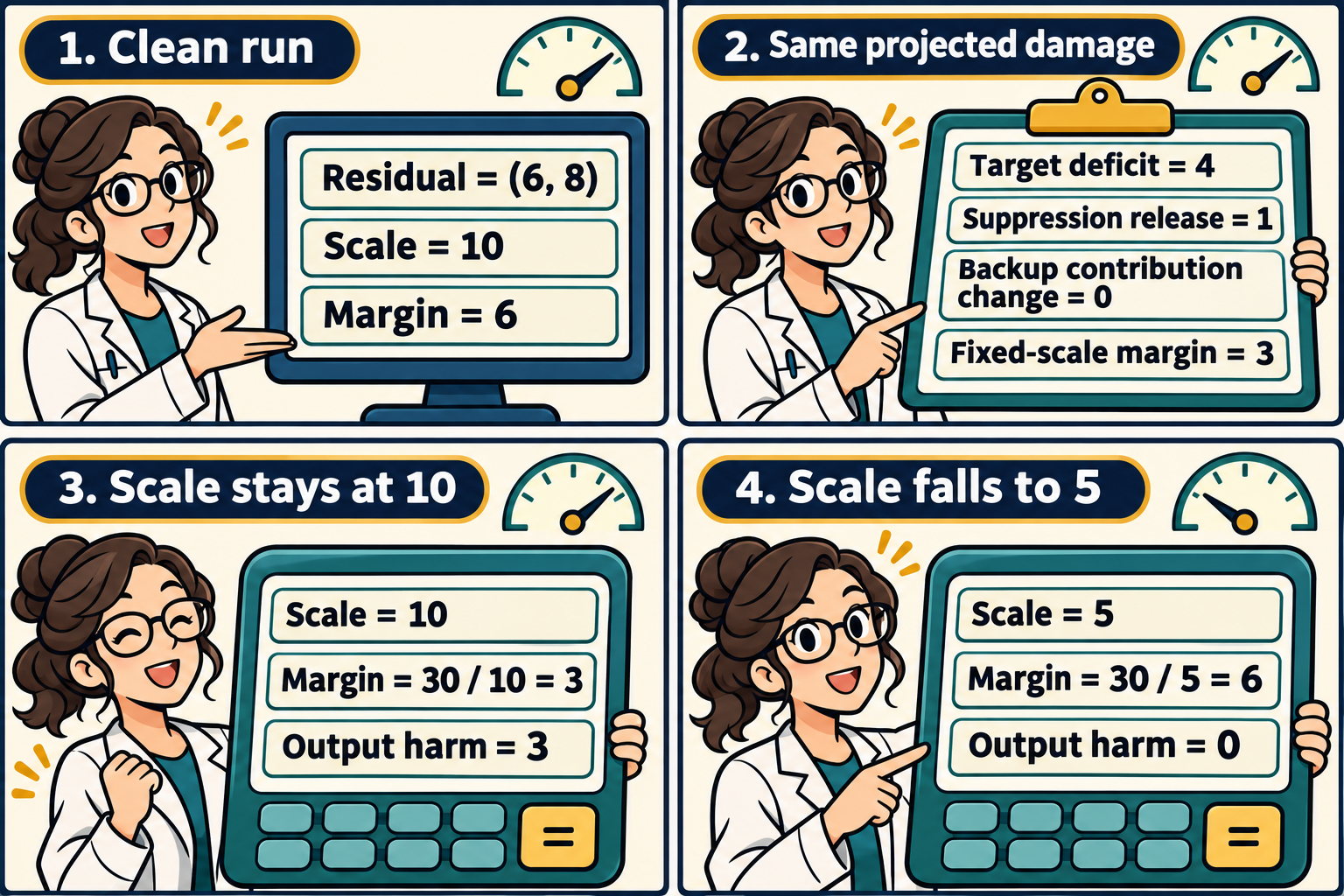
A two-coordinate example separates target damage, suppression release, and the effect of the final normalization scale on a language model readout.
Read the analysis and worked example → · Original paper
November 6, 2026 · Paper published 2026-11-03
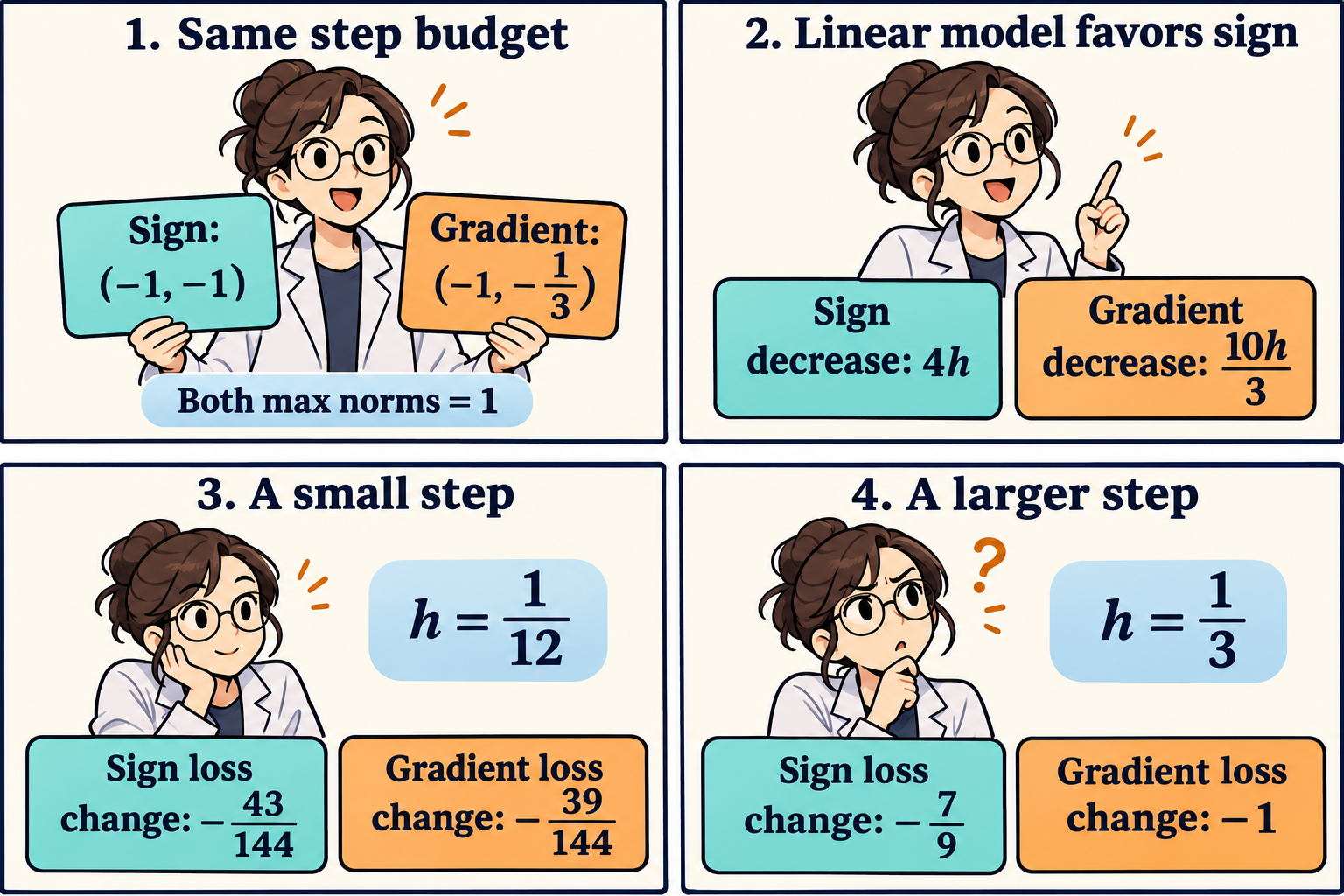
A two-coordinate quadratic gives an exact crossover between a sign direction and a normalized gradient direction under the same maximum-norm step budget.
Read the analysis and worked example → · Original paper
November 5, 2026 · Paper published 2026-11-02
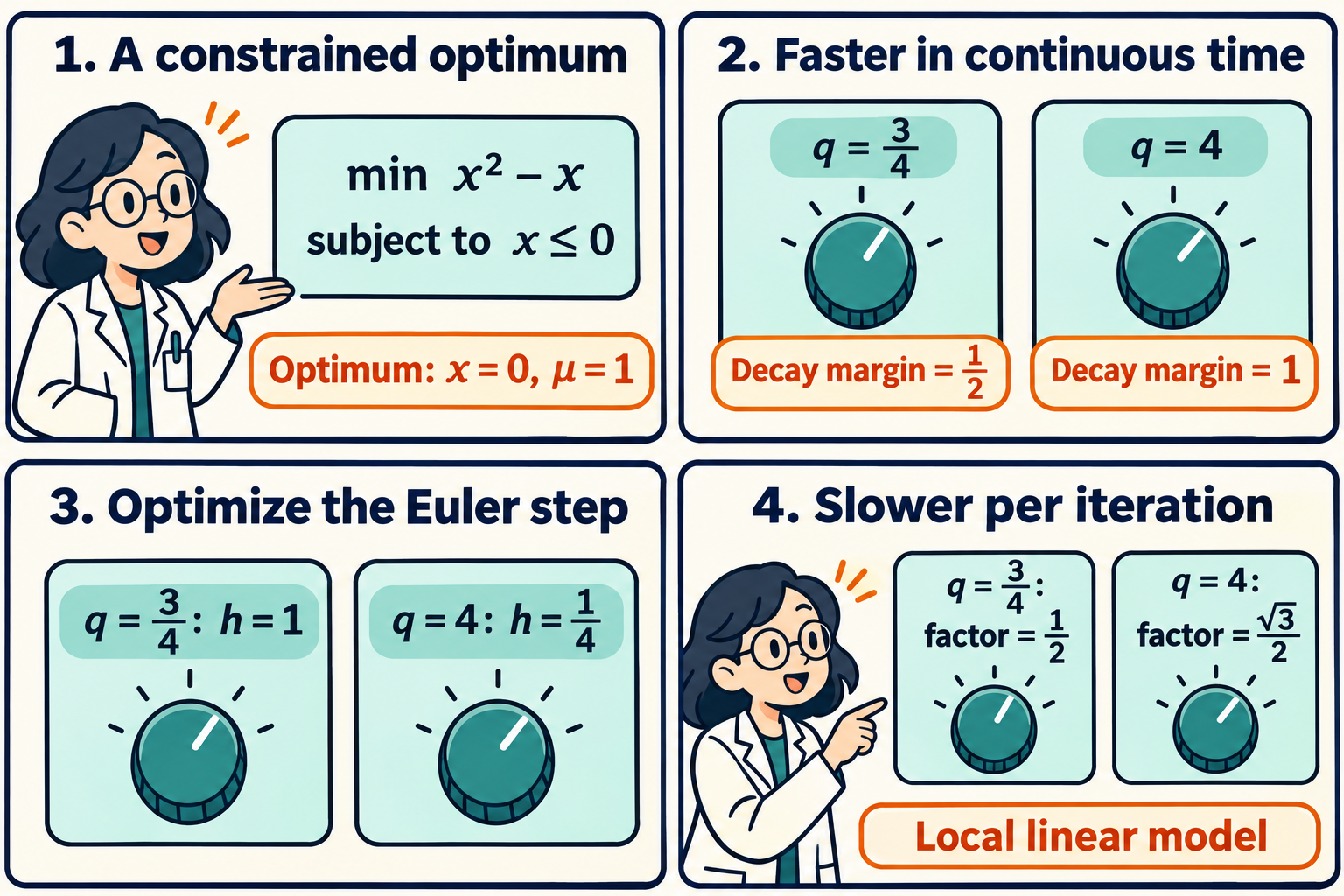
A scalar constrained quadratic doubles its continuous-time spectral decay margin as the integral gain increases, yet its optimally tuned Euler spectral factor worsens from one half to the square root of three over two.
Read the analysis and worked example → · Original paper
November 4, 2026 · Paper published 2026-10-28
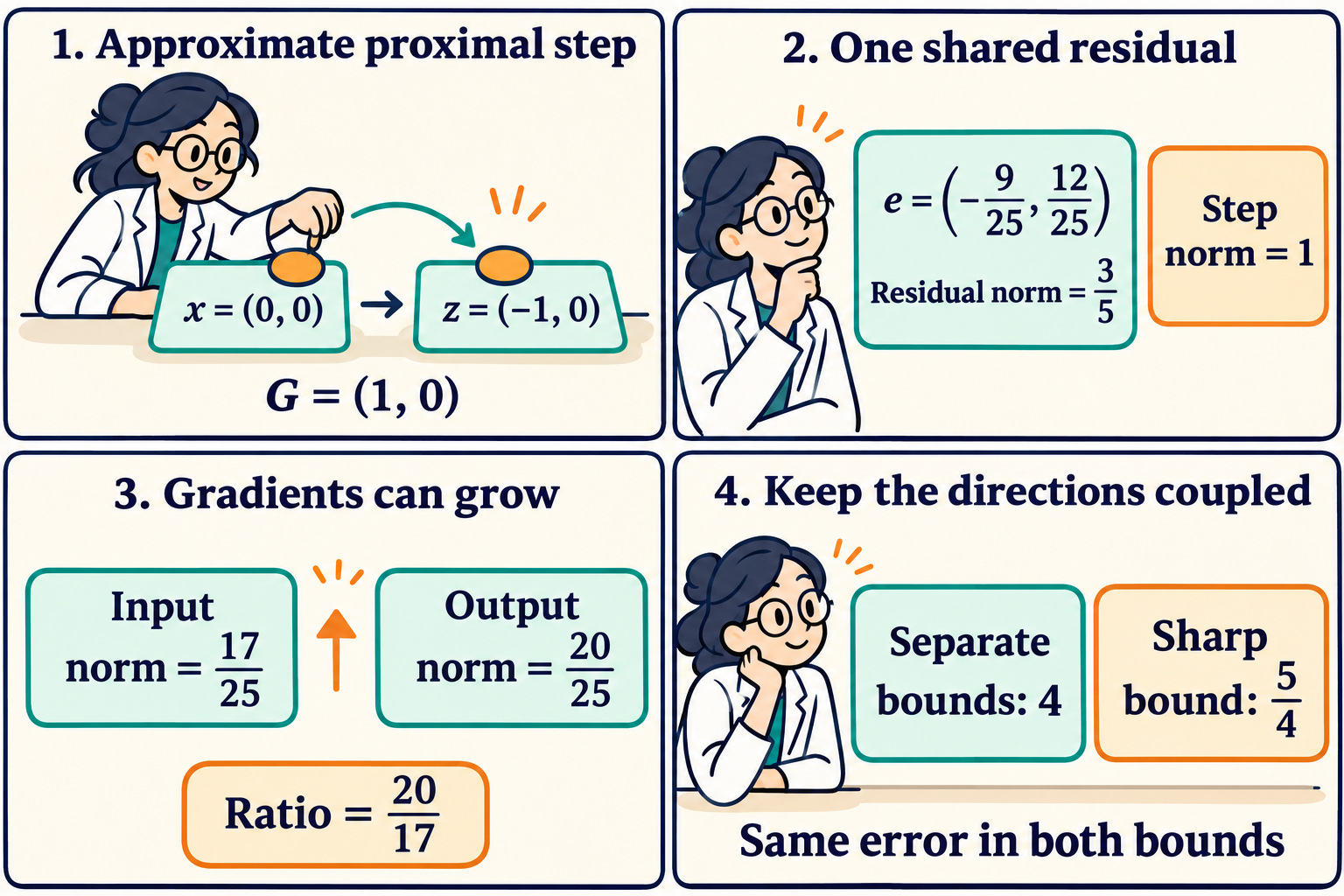
An exact convex quadratic example increases the gradient norm while decreasing the objective, and a shared residual reduces a worst-case stationarity factor from four to five quarters.
Read the analysis and worked example → · Original paper
November 3, 2026 · Paper published 2026-10-28
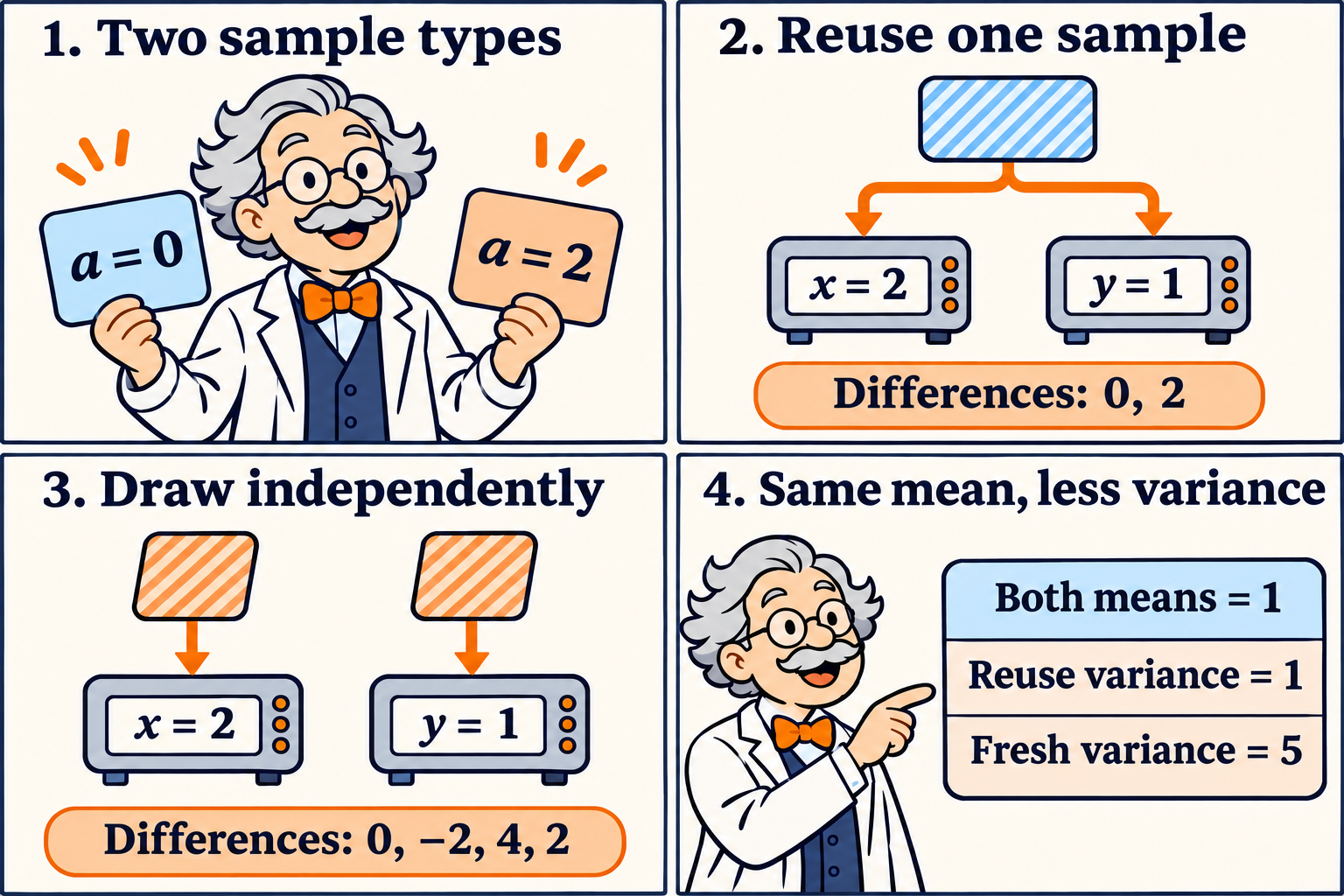
Two gradient queries have the same expected difference under fresh sampling and sample reuse, but their variances differ by a factor of five in a simple interpolating problem.
Read the analysis and worked example → · Original paper
November 2, 2026 · Paper published 2026-10-29
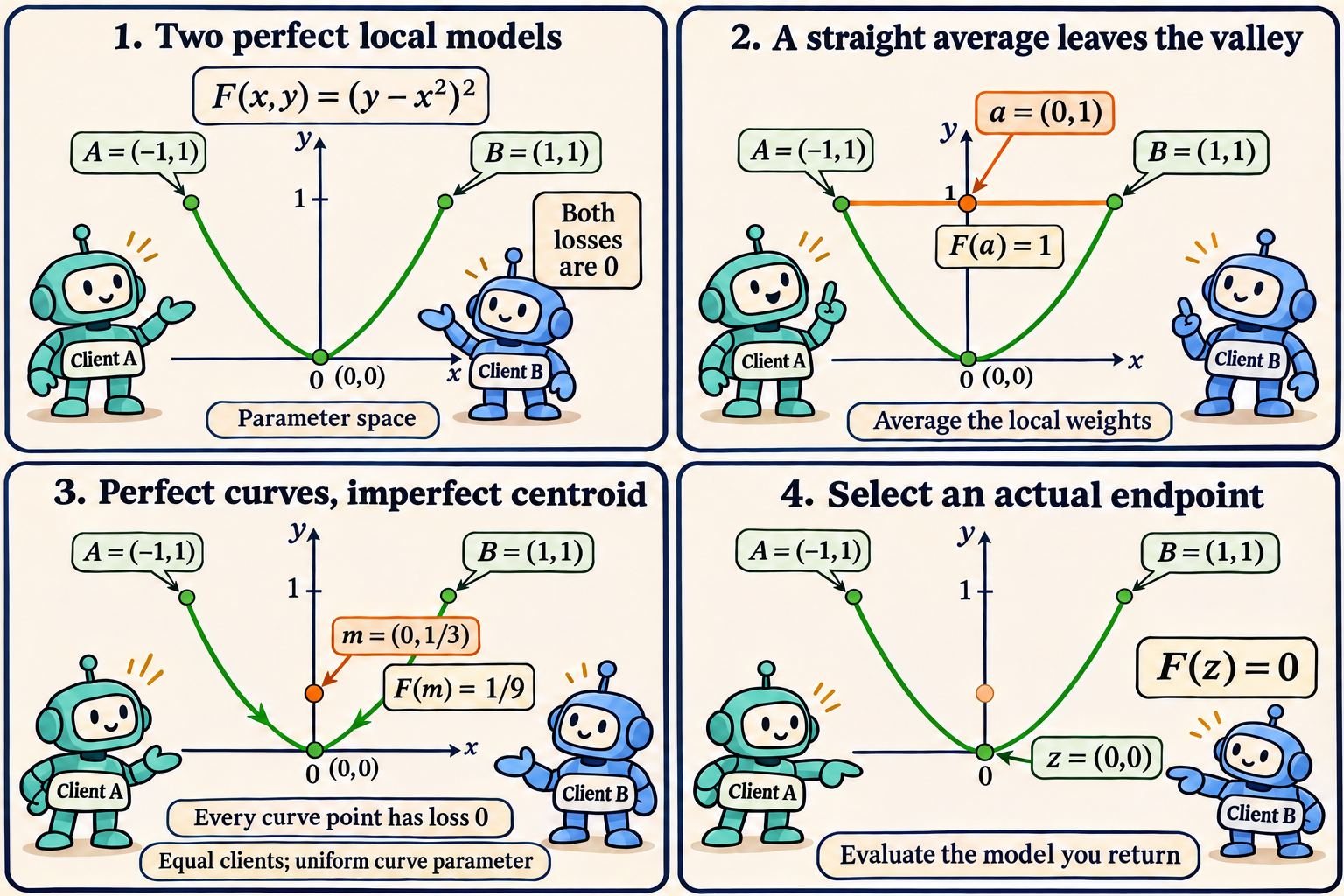
Two clients can follow paths with zero loss to a common model while their path centroid has positive loss. A parabolic example separates fitting, averaging and model selection.
Read the analysis and worked example → · Original paper
November 1, 2026 · Paper published 2026-10-29
A two-step design model shows how noise propagation changes the best privacy allocation, and why a schedule optimized on public dynamics can fail to transfer.
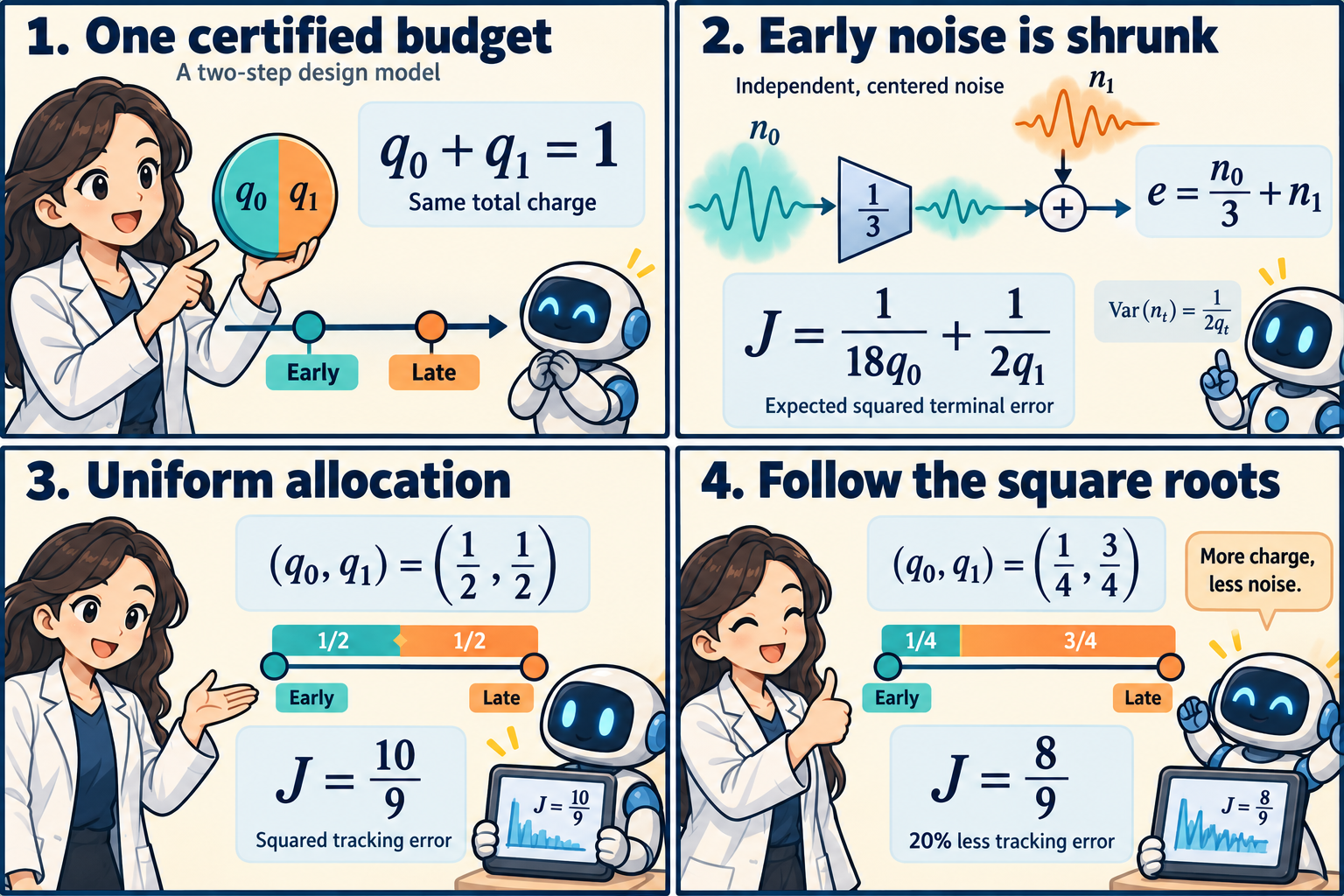
Read the analysis and worked example → · Original paper
October 31, 2026 · Paper published 2026-10-29
A three-outcome example shows how static examples and verified model generations share a likelihood loss, and how the generator and sampling budget shape the update.
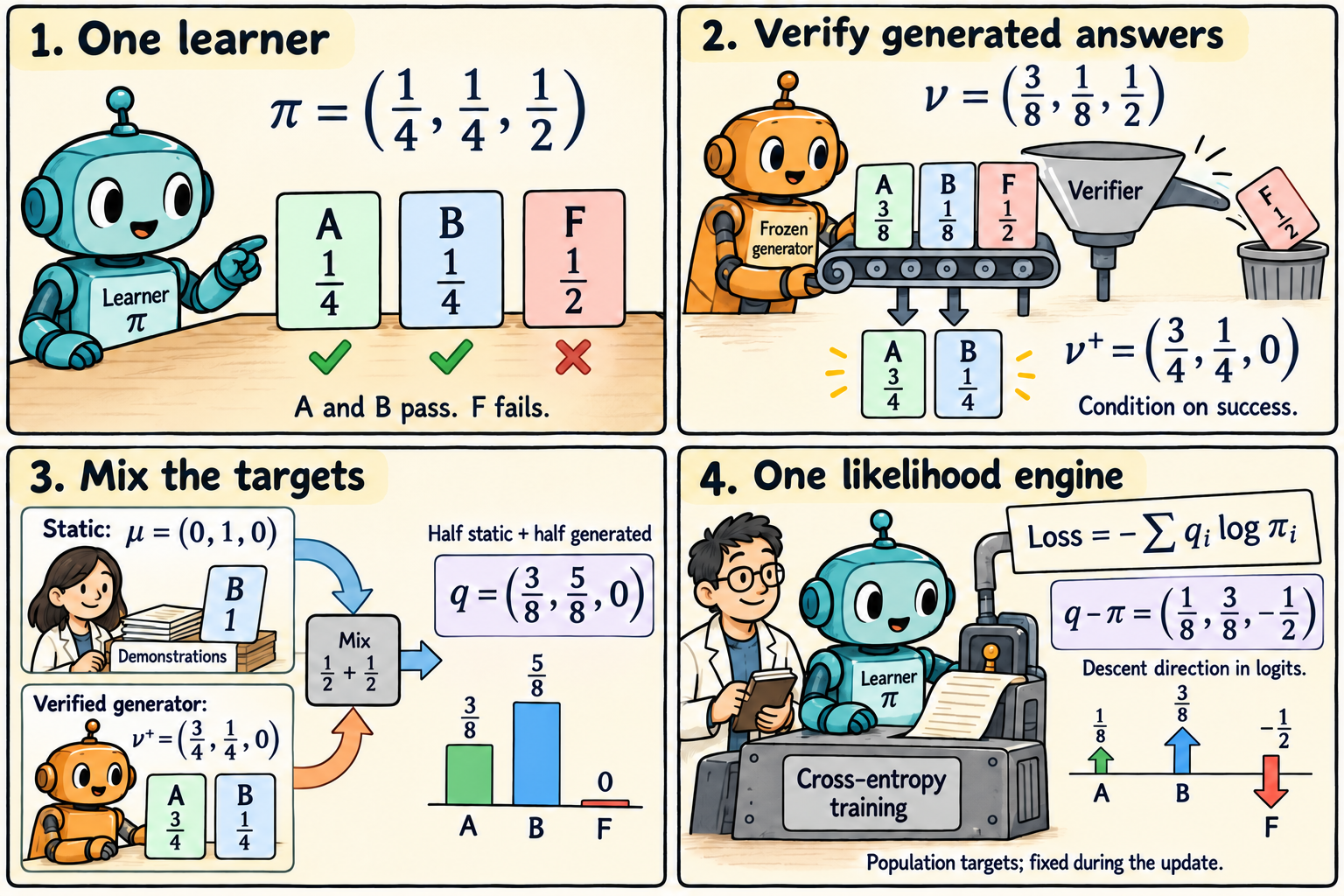
Read the analysis and worked example → · Original paper
October 30, 2026 · Paper published 2026-10-29
An exact two-coordinate example shows how diagonal rescaling can break a projected gradient's protection, and how projecting the full proposed change restores the linear constraint.
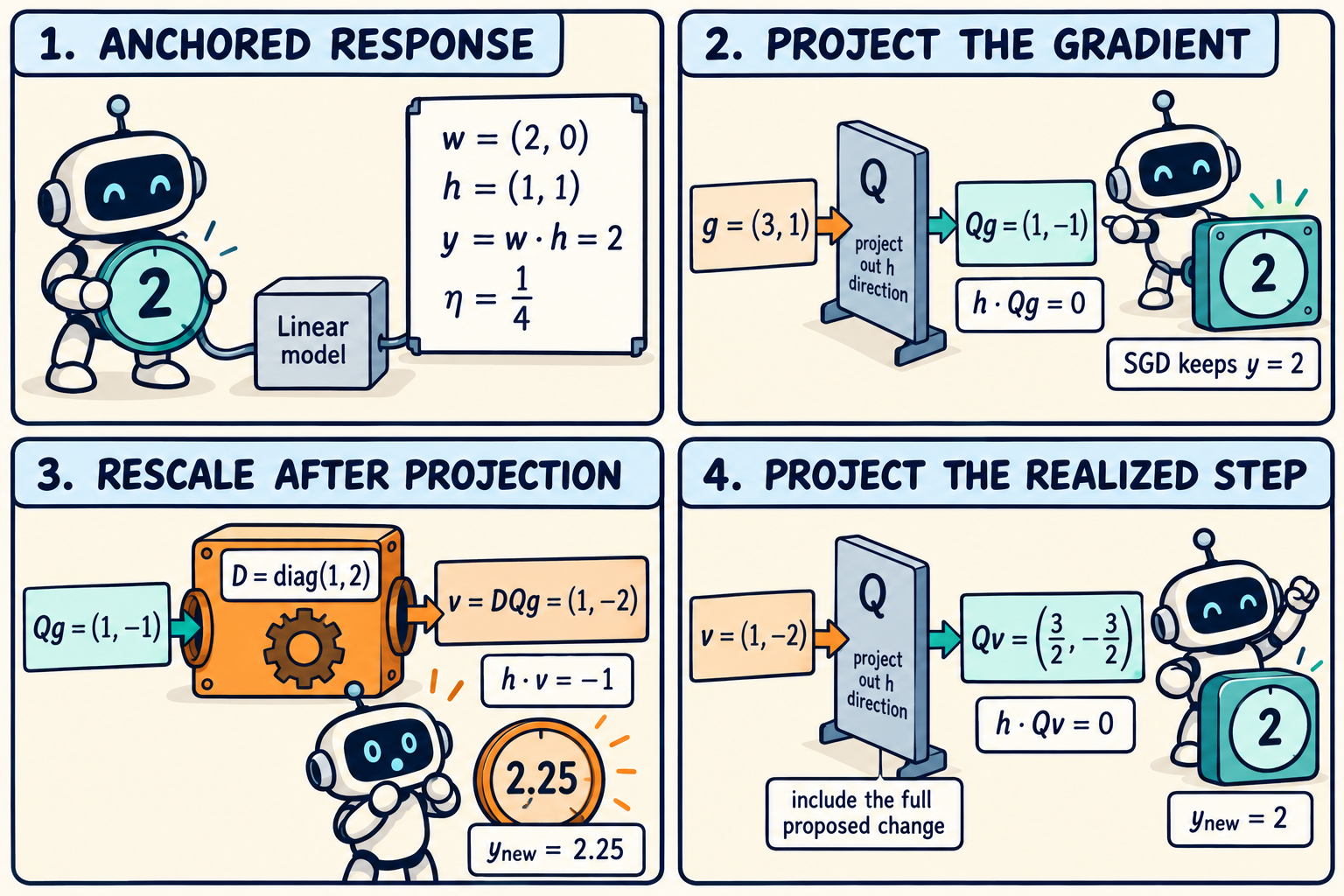
Read the analysis and worked example → · Original paper
October 29, 2026 · Paper published 2026-10-27
The same model risks and the same eight-to-two deployment split can improve or worsen a population loss when error covariance changes.
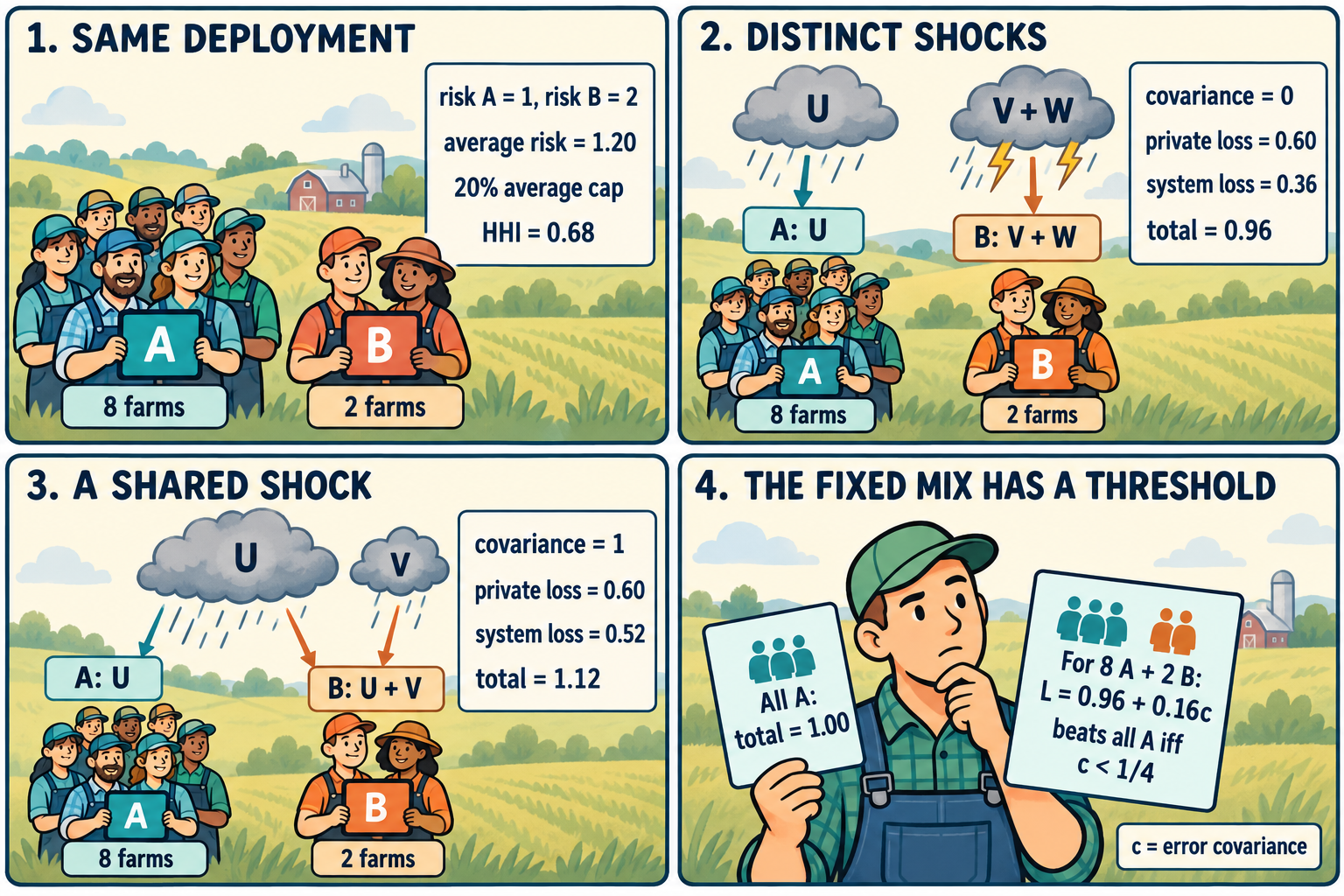
Read the analysis and worked example → · Original paper
October 28, 2026 · Paper published 2026-10-26
An exact two-client quadratic example separates stable local steps from the stability of a server update with one-round-old controls.
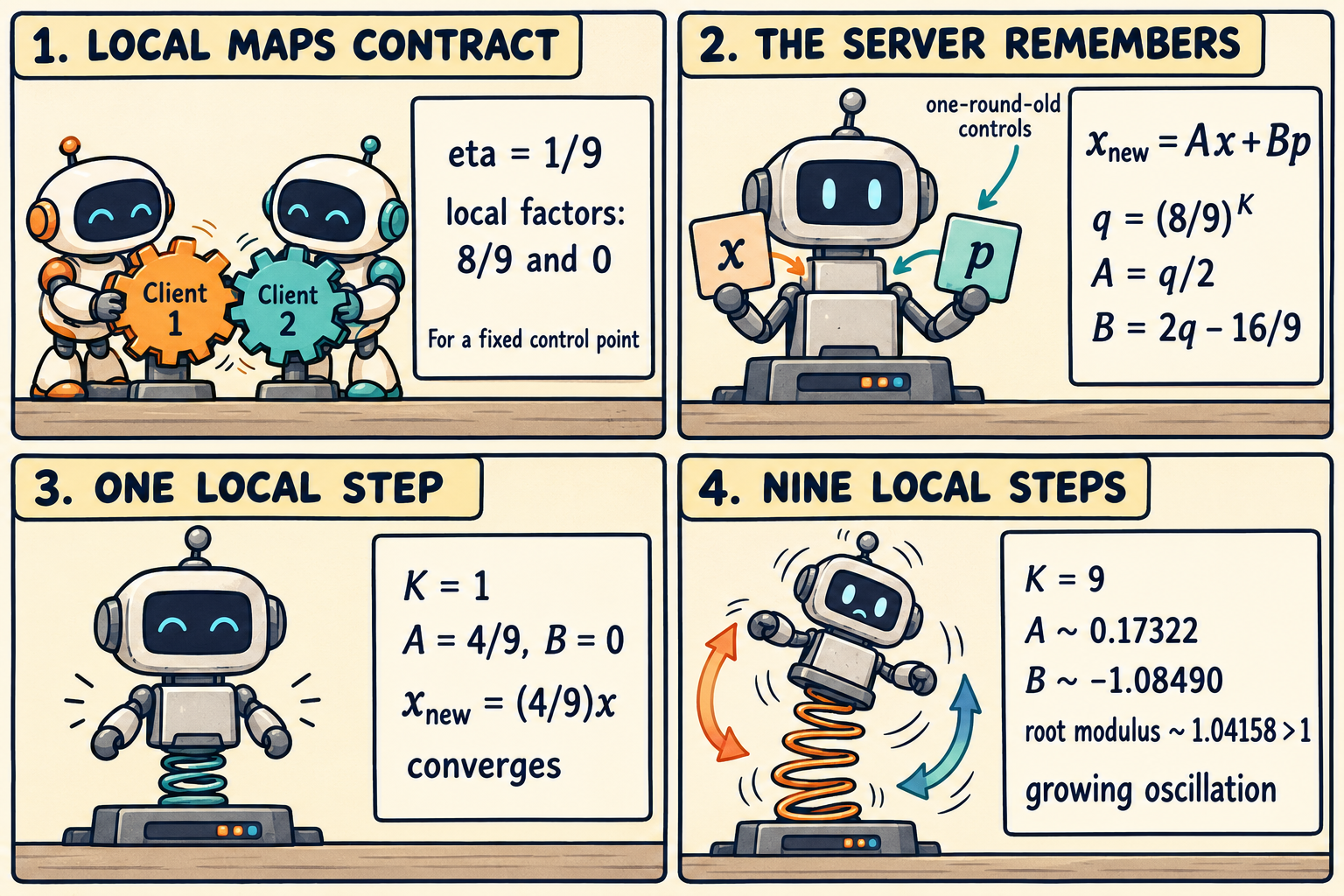
Read the analysis and worked example → · Original paper
October 27, 2026 · Paper published 2026-10-22
A two-class example shows how adapting an observed class can move the decision boundary of a class absent from local training.
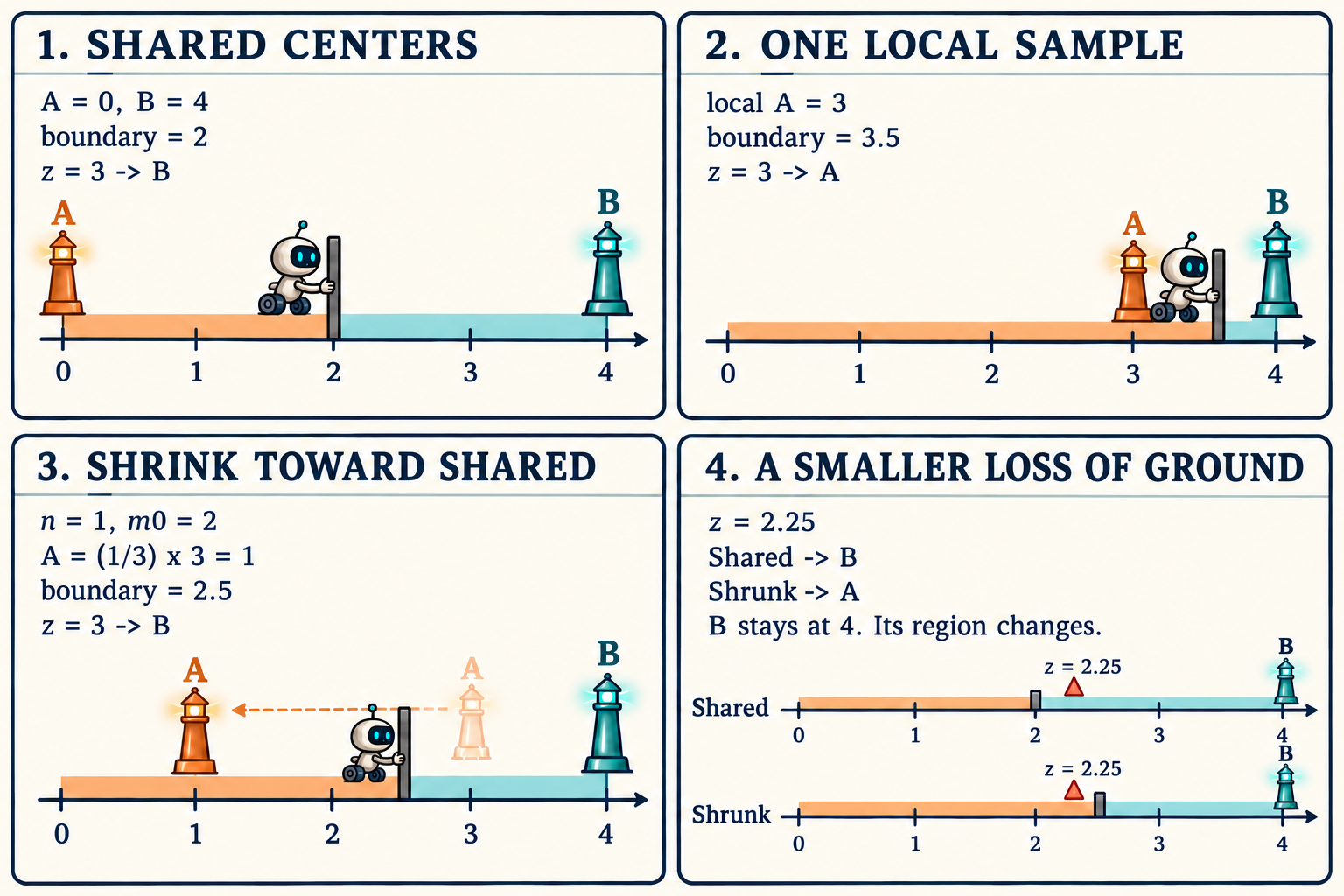
Read the analysis and worked example → · Original paper
October 26, 2026 · Paper published 2026-10-21
A two-step example reverses the preferred data order while keeping the target-step budget and total step-size sum fixed.
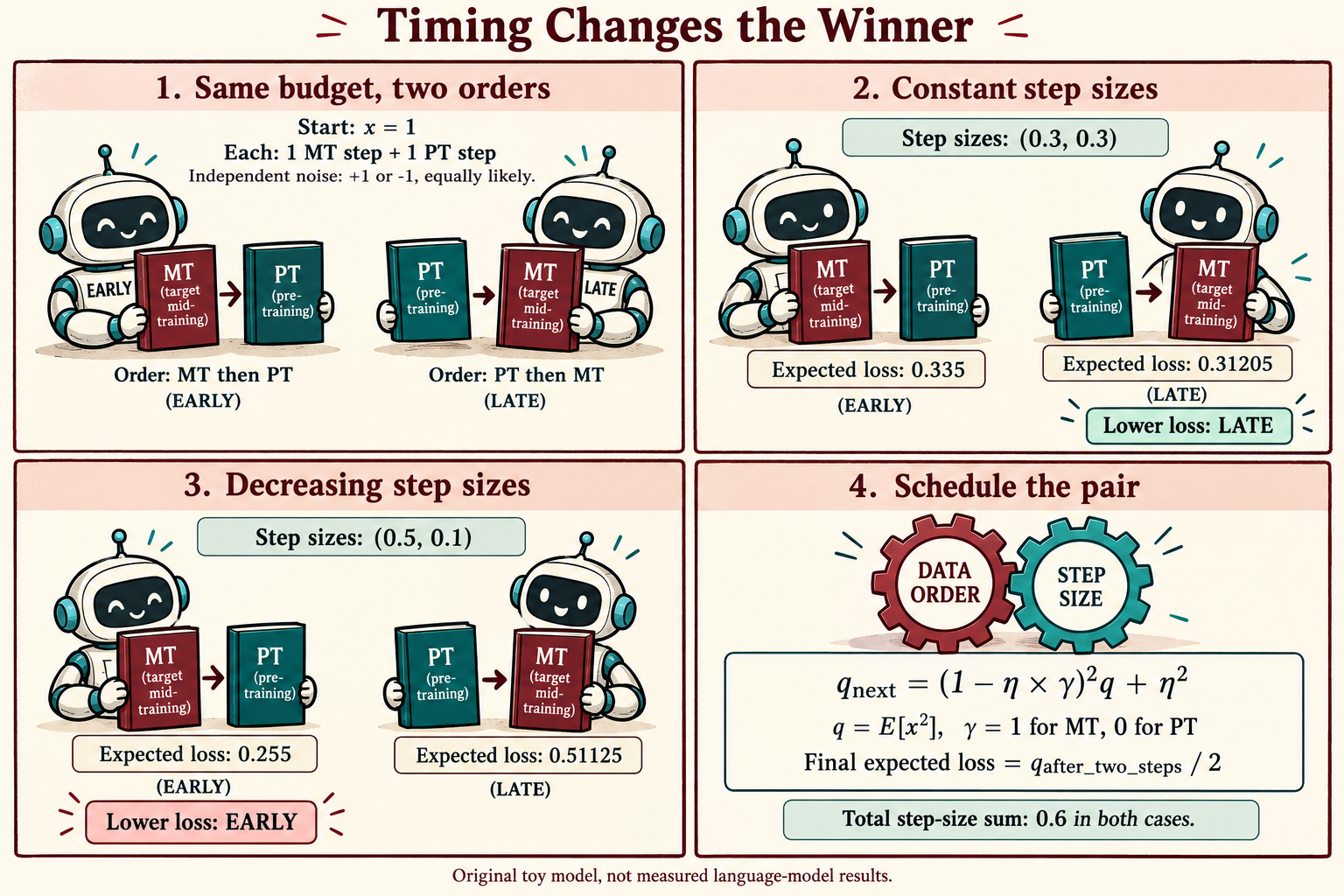
Read the analysis and worked example → · Original paper
October 25, 2026 · Paper published 2026-10-22
An exact binary32 example shows how equivalent cross-entropy formulas produce different gradients, and why a zero-sum check is necessary but insufficient.
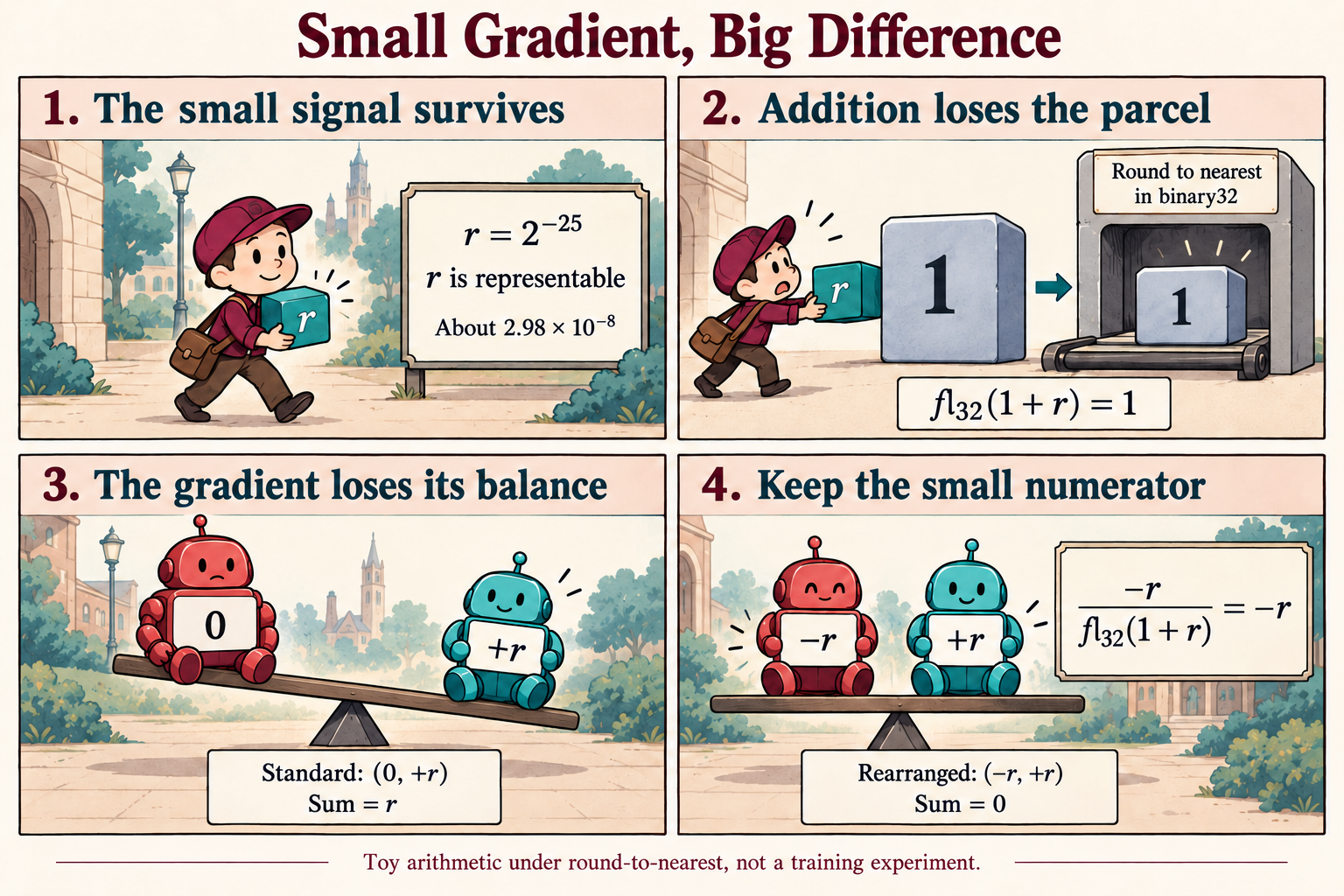
Read the analysis and worked example → · Original paper
October 24, 2026 · Paper published 2026-10-20
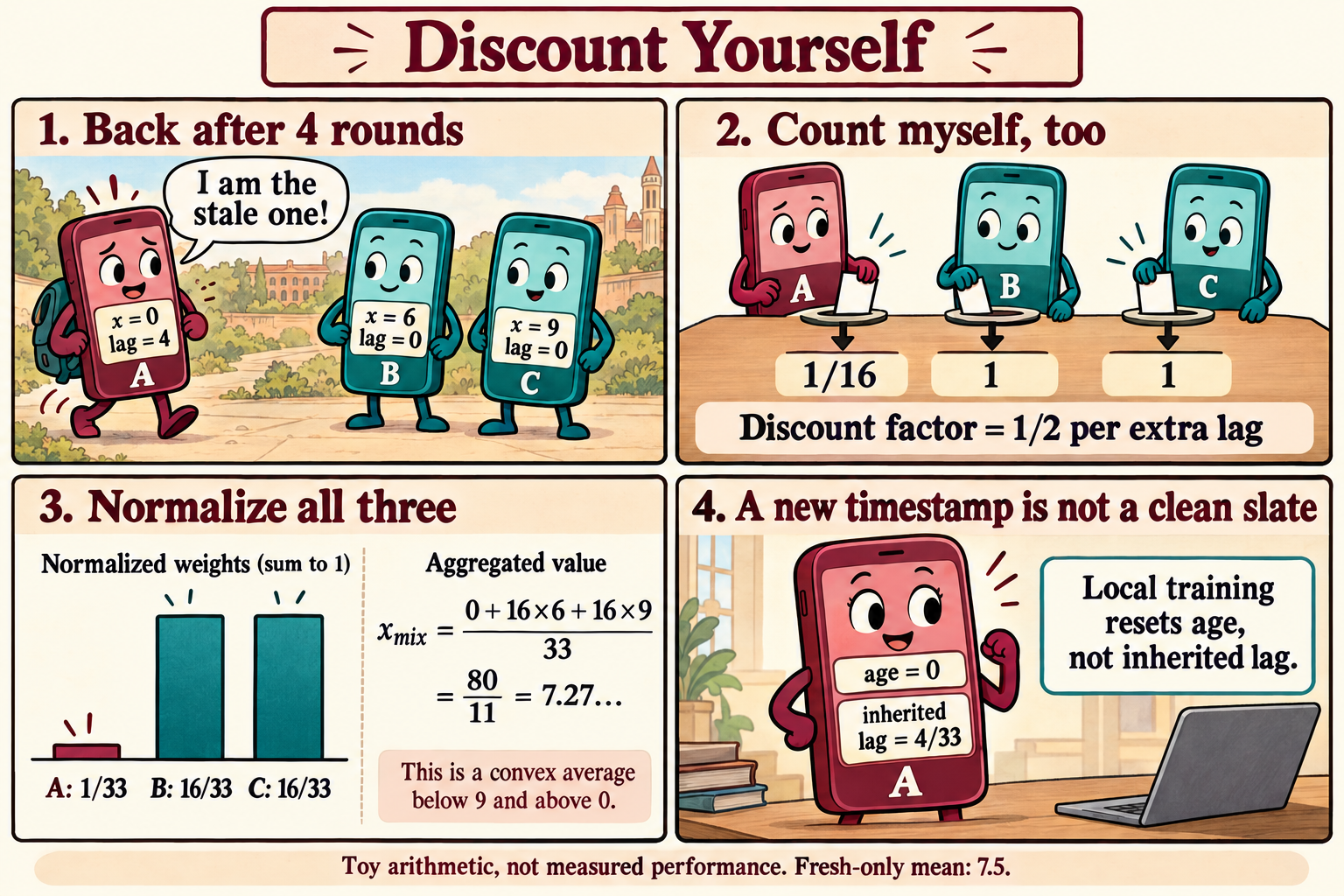
Why a returning device should discount its own stale model, with a worked example and a four-panel mathematical comic.
Read the analysis and worked example → · Original paper